


-1500x1500h.jpeg-36x36.webp)



-1500x1500h.jpeg-240x180w.webp)


Begonite Stone Paving Guide: Design, Installation and Cost Planning
Begonite stone is a decorative, high-density paving material used in outdoor surfaces where strength, texture and architectural character must work together. It is often selected for courtyards, pedestrian routes, villa gardens, mosque surroundings, public squares, cultural spaces and premium landscape projects. In international terminology, it can be described as a granite-look paving block, decorative concrete sett, cobblestone-style paving unit or textured outdoor paving stone. The value of begonite is not limited to its appearance. When installed on a properly prepared base, it offers a compact walking surface, stable joint behaviour and a refined natural-stone effect that fits both traditional and modern design language.
This English guide has been prepared for global readers, architects, contractors, property owners and project managers who want to understand how begonite stone paving is specified, installed and priced. Instead of treating the material as a simple decorative tile, the guide approaches it as a complete paving system: material selection, colour strategy, edge restraint, drainage, bedding layer, compaction, joint filling, maintenance and cost analysis. That system-based thinking is especially important in outdoor construction, because even a premium-looking paving stone can fail if the sub-base, slope and border details are not correctly designed.
MT Altaş İnşaat uses field experience and digital measurement methods to evaluate each project as a complete outdoor surface. For quantity calculation, waste control, sand and cement estimation, border stone needs and logistics planning, the team also promotes MT-Altaş ProMetraj V21.3 Enterprise Software. This combination of construction experience and AI-supported project analysis helps investors move from rough assumptions to more controlled decisions.
What Makes Begonite Stone Different?
The main difference between begonite stone and many ordinary paving alternatives is the balance between surface texture and visual depth. The material is generally produced under strong pressure and vibration, which helps form a dense paving unit with a compact surface. That compactness matters because outdoor paving must resist not only human traffic, but also rain, dust, temperature change, occasional service vehicles and constant cleaning. A paving surface that looks attractive on the first day but loses alignment after one winter is not a professional solution. Begonite is used when the client wants a more architectural finish while still expecting practical outdoor performance.
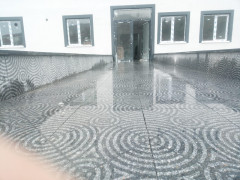
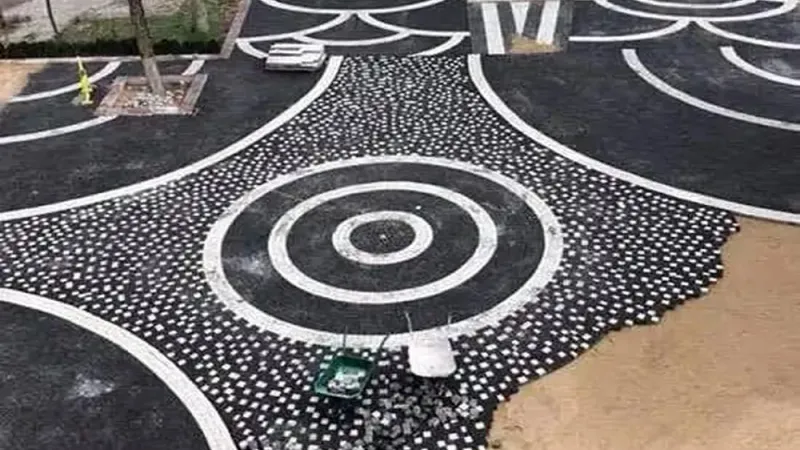
Its small-format geometry allows patterns, curves and border transitions to be created with more flexibility than large slabs. This is why it is effective in circular motifs, fan patterns, walking lines, courtyard compositions and decorative transitions between planting areas and hardscape. In landscape architecture, visual rhythm is important. A surface made only from plain grey units can be functional, but it may not support the identity of the building or public space. Begonite helps create a stronger design signature by combining repeated units with colour contrast and texture.
For global projects, the closest comparison may be made with cobblestone-style concrete setts, granite-effect paving blocks or small modular paving stones. However, the correct choice depends on the climate, traffic load, maintenance expectation and design target. In some projects, begonite may be combined with decorative paving tile applications or standard interlocking pavers to control budget while maintaining a premium focal area.
Technical Dimensions, Consumption and Colour Strategy
Colour Options and Visual Planning
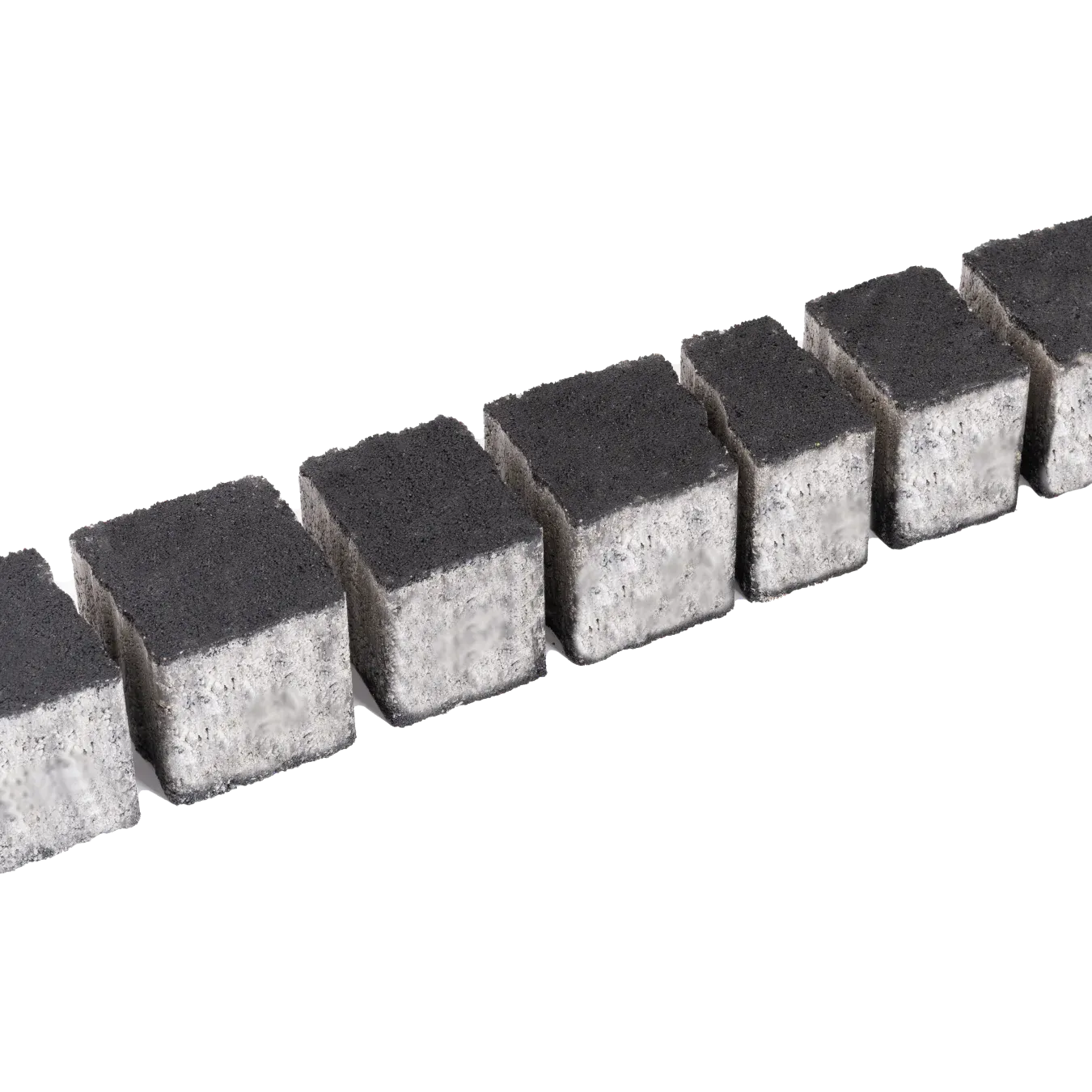


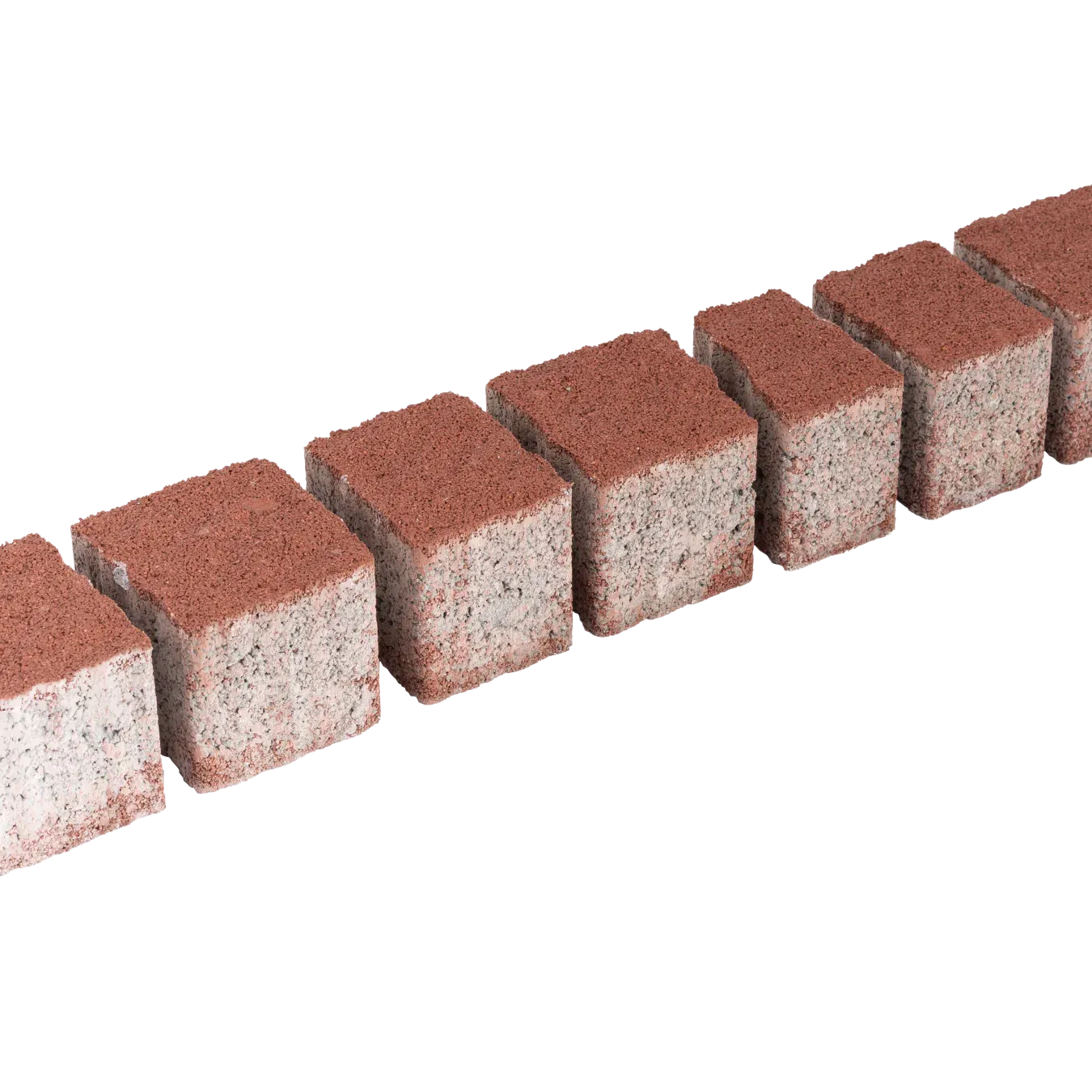

Colour selection should not be treated as a cosmetic detail only. In outdoor paving, colours help define routes, highlight borders, separate pedestrian zones and create visual orientation. White or light units can be used as a line, ring or border accent. Dark units can create depth and contrast. Warm colours can soften a hard landscape around gardens, hospitality spaces or traditional buildings. Grey tones are often used when the project requires a calm and neutral surface.
In professional work, colour planning should be connected to edging. A pattern with no stable edge may open over time. For this reason, garden borders, andesite borders and concrete curbs are often used to frame the paved area. MT Altaş İnşaat can support such details through related solutions such as garden border stone applications and andesite 15x20x50 border stone solutions.
Where Begonite Stone Works Best
Begonite stone performs especially well in projects where the outdoor floor is part of the visual identity of the site. A garden walkway, mosque courtyard, villa entrance or public square is not only a surface that people walk on. It is also one of the first design elements visitors notice. Because begonite can create lines, rings, fan patterns and compact colour combinations, it helps transform the ground from a passive background into an architectural element.
In private villas, the material can be used around garden paths, seating areas, entrances and decorative landscape islands. In public environments, it can support pedestrian circulation while adding a more crafted appearance than plain concrete. In cultural and religious sites, the natural-stone effect can respect the character of the building without creating a visually aggressive floor. This is one of the reasons why it is often considered for mosque courtyards and traditional surroundings.
The designer should also consider how the paving connects to planting beds, walls, stairs, ramps and drainage lines. Many surface failures begin at transitions. If a planted edge is not restrained, the bedding sand may move. If a ramp is too steep, walking comfort may decrease. If the design ignores surface water, puddles may form and damage the impression of the project. Begonite works best when the entire hardscape is planned as a connected system rather than a group of separate decorative pieces.
Begonite Stone, Interlocking Pavers, Natural Stone or Paving Tiles?
There is no single paving material that is perfect for every project. The correct decision depends on design expectation, budget, construction time, traffic load, slope, drainage and maintenance capacity. Begonite is usually chosen when the owner wants a surface that feels more crafted than standard interlocking pavers but more controlled and uniform than irregular natural stone. It gives the designer enough modularity to form patterns while still maintaining a durable outdoor surface.
For vehicle-heavy industrial sites, a conventional interlocking paving system may be more efficient. For boutique courtyards or landscape paths, begonite can create a stronger visual effect. For premium entrances, it may be used as a central feature while other paving materials cover larger areas. This hybrid strategy can reduce cost without losing the main architectural impression. MT Altaş İnşaat evaluates the site before recommending a final material combination.
Natural stone has an authentic luxury character, but it may require more complex thickness control, sorting and installation planning. Paving tiles can be practical in regular modular layouts but may not provide the same cobblestone-style texture. Begonite sits between these options: more decorative than standard pavers, more predictable than random stone and more visually expressive than many plain concrete tiles.
Base Preparation: The Hidden Layer Behind a Premium Surface
The visible stone is only the final layer of a paving system. The long-term success of begonite stone depends on what happens below the surface. A weak base can cause settlement, joint opening, uneven lines, puddles and broken edges. A carefully prepared base, on the other hand, allows the units to stay aligned, transfer loads and maintain the intended pattern for many years. This is why professional installation begins with ground evaluation rather than with stone placement.
Core base preparation includes site inspection, excavation, levelling, sub-base placement, compaction, bedding layer preparation and slope control. The bedding layer should not be used to hide major level errors. It is a precision layer, not a structural repair layer. The structural stability comes from correct excavation, compacted sub-base and edge restraint. In colder or wetter climates, drainage becomes even more important. If water remains inside the base, the surface may move during seasonal changes.
Professional base preparation also protects the client's budget. Reworking a settled paving area is more expensive than preparing it correctly at the beginning. For this reason, MT Altaş İnşaat treats excavation depth, soil condition, drainage direction and border details as part of the same decision. A beautiful surface is the result of hidden discipline.
Step-by-Step Begonite Stone Installation
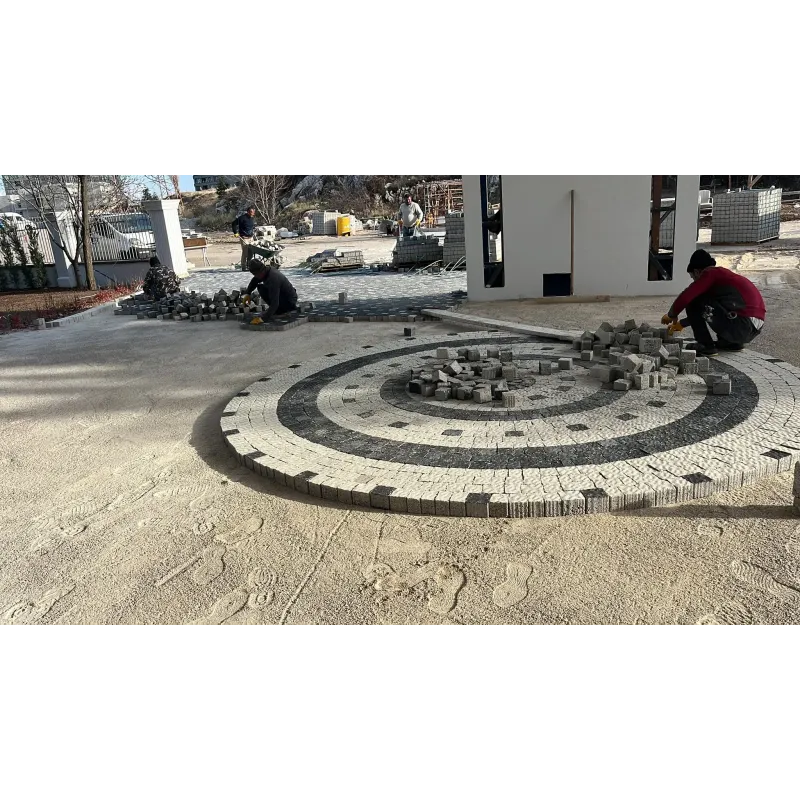
The installation team first defines the starting point, reference lines and pattern direction. This stage is critical in decorative layouts because a small alignment mistake at the beginning can become highly visible as the pattern expands. Circular designs, fan shapes and contrasting colour bands require careful control. The installer must think ahead, not only place one stone after another.
After the bedding layer is prepared, begonite units are placed manually. The team controls joint spacing, colour distribution and pattern continuity. Edge cuts, tree wells, wall junctions and border intersections require precise cutting. Clean detail work separates a premium project from a basic application. At the end of the placement stage, fine jointing sand is swept into the gaps and the surface is compacted with suitable equipment.
Final inspection includes cleaning, level control, checking open joints, reviewing drainage points and correcting loose pieces. The most attractive begonite projects are usually the result of careful layout planning. Small units make it possible to create refined details, but they also require patience and alignment discipline. Poor workmanship may be visible immediately in curved lines, broken patterns and irregular joints.
Borders, Edge Restraints and Drainage Details
A paving surface behaves like a system of small units. Those units need restraint. Without a border, movement at the edges can gradually disturb the entire surface. This is why edge stones, concrete curbs, garden borders or andesite border stones are more than decorative accessories. They help hold the pattern, protect the bedding layer and define a clean transition between paving and landscape.
Drainage is equally important. Outdoor paving should never be perfectly flat unless a specific drainage system is designed under or around it. A slight controlled slope helps rainwater move away from the building. Water should not collect near door thresholds, wall bases, tree pits or low corners. If the site includes a large courtyard, drainage channels or collection points may be required.
In high-quality work, border design, surface slope and visual pattern are coordinated together. A circular pattern should not fight the water direction. A decorative line should not end in a weak unrestrained edge. A planting bed should not allow soil to wash into the joints. MT Altaş İnşaat evaluates these details during discovery and application planning so that the final appearance is supported by reliable construction logic.
Begonite Stone Cost Factors
Begonite stone price cannot be judged only by a simple square-metre figure. A realistic project cost includes material quantity, waste allowance, colour selection, border details, base preparation, labour, cutting work, transport, site access and schedule. A small decorative courtyard may have a higher unit labour cost because of detail work, while a larger open area may have a lower labour ratio but higher logistics impact.
Material and colour choice can change the cost because special colour combinations may require more careful supply planning. Ground preparation may also influence the total budget more than the visible stone itself. Excavation, sub-base material, compaction and bedding quality are essential for long-term stability. Transport and site access should be included early, especially when palletised materials must be delivered to narrow streets, village roads or restricted construction areas.
A professional quotation should clearly separate product supply, base preparation, installation labour, border stones, jointing sand, transport and taxes where applicable. This transparency protects both the client and contractor. MT Altaş İnşaat uses measurement-based planning and ProMetraj-supported analysis to reduce unnecessary material purchases, control waste and make the budget easier to understand before construction begins.
Maintenance, Cleaning and Long-Term Appearance
Begonite stone paving is relatively easy to maintain when it is correctly installed. Most routine care involves removing dust, soil, leaves and organic residue before they build up in the joints. Light washing can refresh the surface, especially after seasonal dust or landscaping work. Harsh chemical cleaners should be avoided unless they are specifically compatible with concrete paving materials. Aggressive cleaning methods may damage colour tone, joint structure or surface texture.
Joint condition should be checked periodically. If jointing sand is washed away by heavy rain, pressure washing or slope-related water flow, it should be replenished. Open joints allow movement, weed growth and surface instability. In planted areas, soil migration should be controlled with clean borders. Around tree wells, roots and irrigation should be considered because they can affect the base over time.
A well-maintained begonite surface can keep its design impact for many years. The most important principle is prevention. Keeping drainage routes clear, avoiding heavy impact at edges, replacing lost joint sand and cleaning organic stains early will protect the investment. MT Altaş İnşaat can provide project-specific aftercare advice depending on climate, traffic and the type of surrounding landscape.
Plan Your Begonite Stone Project with MT Altaş İnşaat
Share your approximate area, location, border need and surface purpose. The team can evaluate material quantities, bedding needs, labour scope, logistics and optional border stone details for a clearer project plan.
Digital Project Advantage: MT-Altaş ProMetraj V21.3 Enterprise Software
Outdoor paving projects often fail at the budget stage because the estimate is too simple. A surface area is measured, a material price is multiplied, and hidden details are forgotten. Begonite stone projects require a more careful approach. The number of paving units, bedding material, edge stones, waste ratio, cutting loss, sand quantity, cement support where needed, logistics, labour and site access should be evaluated together. MT-Altaş ProMetraj V21.3 Enterprise Software is presented as a digital support system for this type of calculation.
Quantity Control
Metraj, waste allowance, pallet planning and material requirement can be evaluated with more discipline before procurement begins.
Cost Visibility
Material, labour, sand, cement, border stones and transport can be considered as a connected cost structure instead of separate guesses.
AI-Supported Guidance
The integrated digital assistant helps users ask project questions and move toward a more informed quotation conversation.
From measurement to decision.
Use digital project logic to control cost, reduce waste and plan your begonite stone application with more confidence.
Frequently Asked Questions About Begonite Stone
Is begonite stone suitable for cold climates?
It can perform well in cold climates when the paving units are dense, the base is properly compacted and drainage is correctly designed. Freeze-thaw resistance depends not only on the stone but also on the complete installation system.
Can begonite stone be used for vehicle areas?
It may be used in light vehicle areas if the base and edge restraints are designed for that load. Heavy vehicle routes require a special engineering review and may need a different paving solution.
Does begonite stone fade over time?
Colour performance depends on pigment quality, exposure, cleaning method and general maintenance. Good-quality units and proper care help preserve the visual appearance for a long period.
How long does a begonite stone installation take?
The duration depends on project size, pattern complexity, excavation depth, base preparation, weather and site access. A detailed schedule can be prepared after measurement and site review.
What is the biggest mistake in decorative paving projects?
The biggest mistake is focusing only on the visible stone and ignoring the base, drainage and edge restraint. A beautiful pattern needs structural support to stay beautiful.
Can begonite be combined with other paving materials?
Yes. It can be used as a decorative feature area and combined with interlocking pavers, paving tiles, natural stone borders or andesite curb stones depending on the project design.
Final Recommendation for Global Projects
Begonite stone is a strong option for clients who want more than a basic outdoor floor. It is suitable for projects where the ground surface must become part of the design identity: entrance routes, courtyard centres, social spaces, mosque surroundings, villa gardens and decorative pedestrian areas. Its value increases when it is planned with correct borders, drainage, base layers and maintenance logic.
For a successful result, start with the site conditions, not only the catalogue image. Measure the area, identify the traffic load, decide the visual pattern, calculate edge restraints, check water flow and compare the complete installed cost. MT Altaş İnşaat brings together field practice, material knowledge and ProMetraj V21.3 digital analysis to help clients plan begonite stone paving with a more professional and predictable process.
Global Specification Notes for Begonite Stone Projects
International readers often compare paving systems only by product appearance. That approach is risky because outdoor paving is affected by climate, movement, load and water. A product photo can show colour and texture, but it cannot show the base quality under the surface. For global traffic, this point is important: the best paving decision is made by evaluating the whole system, not a single stone.
In a hot climate, colour and surface comfort can become more important. Very dark patterns may absorb more heat, while light accents can visually soften the surface. In a wet climate, drainage and joint stability become more important. In a cold climate, freeze-thaw behaviour should be considered together with base permeability and water management. Begonite stone can be adapted to different climates, but the installation detail should follow the local site conditions.
Another global consideration is architectural identity. In some countries, outdoor paving is expected to look minimal and neutral. In others, decorative contrast and geometric patterns are valued. Begonite stone gives designers the ability to move between both languages. It can be used quietly in grey and natural tones, or it can become a strong design feature through black, white, red, yellow or mixed colour arrangements.
Project owners should request a specification that defines the surface area, expected load, base depth, bedding material, edge restraint type, joint filling method, drainage direction and maintenance plan. This specification makes comparison between quotations easier. A cheaper offer that ignores the base, borders or transport may become more expensive after the surface starts to move. A professional offer should describe what is included and what is excluded.
For MT Altaş İnşaat, begonite stone is not only a product category; it is part of a broader outdoor surface service. The company can evaluate decorative paving, garden borders, andesite border stones, paving tile applications and interlocking paving alternatives together. This allows the client to choose the right balance between appearance, durability and budget. The ProMetraj V21.3 approach strengthens this process by connecting field measurement with digital calculation logic.
International readers often compare paving systems only by product appearance. That approach is risky because outdoor paving is affected by climate, movement, load and water. A product photo can show colour and texture, but it cannot show the base quality under the surface. For global traffic, this point is important: the best paving decision is made by evaluating the whole system, not a single stone.
In a hot climate, colour and surface comfort can become more important. Very dark patterns may absorb more heat, while light accents can visually soften the surface. In a wet climate, drainage and joint stability become more important. In a cold climate, freeze-thaw behaviour should be considered together with base permeability and water management. Begonite stone can be adapted to different climates, but the installation detail should follow the local site conditions.
Another global consideration is architectural identity. In some countries, outdoor paving is expected to look minimal and neutral. In others, decorative contrast and geometric patterns are valued. Begonite stone gives designers the ability to move between both languages. It can be used quietly in grey and natural tones, or it can become a strong design feature through black, white, red, yellow or mixed colour arrangements.
Project owners should request a specification that defines the surface area, expected load, base depth, bedding material, edge restraint type, joint filling method, drainage direction and maintenance plan. This specification makes comparison between quotations easier. A cheaper offer that ignores the base, borders or transport may become more expensive after the surface starts to move. A professional offer should describe what is included and what is excluded.
For MT Altaş İnşaat, begonite stone is not only a product category; it is part of a broader outdoor surface service. The company can evaluate decorative paving, garden borders, andesite border stones, paving tile applications and interlocking paving alternatives together. This allows the client to choose the right balance between appearance, durability and budget. The ProMetraj V21.3 approach strengthens this process by connecting field measurement with digital calculation logic.
International readers often compare paving systems only by product appearance. That approach is risky because outdoor paving is affected by climate, movement, load and water. A product photo can show colour and texture, but it cannot show the base quality under the surface. For global traffic, this point is important: the best paving decision is made by evaluating the whole system, not a single stone.
In a hot climate, colour and surface comfort can become more important. Very dark patterns may absorb more heat, while light accents can visually soften the surface. In a wet climate, drainage and joint stability become more important. In a cold climate, freeze-thaw behaviour should be considered together with base permeability and water management. Begonite stone can be adapted to different climates, but the installation detail should follow the local site conditions.
Another global consideration is architectural identity. In some countries, outdoor paving is expected to look minimal and neutral. In others, decorative contrast and geometric patterns are valued. Begonite stone gives designers the ability to move between both languages. It can be used quietly in grey and natural tones, or it can become a strong design feature through black, white, red, yellow or mixed colour arrangements.
Project owners should request a specification that defines the surface area, expected load, base depth, bedding material, edge restraint type, joint filling method, drainage direction and maintenance plan. This specification makes comparison between quotations easier. A cheaper offer that ignores the base, borders or transport may become more expensive after the surface starts to move. A professional offer should describe what is included and what is excluded.
For MT Altaş İnşaat, begonite stone is not only a product category; it is part of a broader outdoor surface service. The company can evaluate decorative paving, garden borders, andesite border stones, paving tile applications and interlocking paving alternatives together. This allows the client to choose the right balance between appearance, durability and budget. The ProMetraj V21.3 approach strengthens this process by connecting field measurement with digital calculation logic.
International readers often compare paving systems only by product appearance. That approach is risky because outdoor paving is affected by climate, movement, load and water. A product photo can show colour and texture, but it cannot show the base quality under the surface. For global traffic, this point is important: the best paving decision is made by evaluating the whole system, not a single stone.
In a hot climate, colour and surface comfort can become more important. Very dark patterns may absorb more heat, while light accents can visually soften the surface. In a wet climate, drainage and joint stability become more important. In a cold climate, freeze-thaw behaviour should be considered together with base permeability and water management. Begonite stone can be adapted to different climates, but the installation detail should follow the local site conditions.
Another global consideration is architectural identity. In some countries, outdoor paving is expected to look minimal and neutral. In others, decorative contrast and geometric patterns are valued. Begonite stone gives designers the ability to move between both languages. It can be used quietly in grey and natural tones, or it can become a strong design feature through black, white, red, yellow or mixed colour arrangements.
Project owners should request a specification that defines the surface area, expected load, base depth, bedding material, edge restraint type, joint filling method, drainage direction and maintenance plan. This specification makes comparison between quotations easier. A cheaper offer that ignores the base, borders or transport may become more expensive after the surface starts to move. A professional offer should describe what is included and what is excluded.
For MT Altaş İnşaat, begonite stone is not only a product category; it is part of a broader outdoor surface service. The company can evaluate decorative paving, garden borders, andesite border stones, paving tile applications and interlocking paving alternatives together. This allows the client to choose the right balance between appearance, durability and budget. The ProMetraj V21.3 approach strengthens this process by connecting field measurement with digital calculation logic.
International readers often compare paving systems only by product appearance. That approach is risky because outdoor paving is affected by climate, movement, load and water. A product photo can show colour and texture, but it cannot show the base quality under the surface. For global traffic, this point is important: the best paving decision is made by evaluating the whole system, not a single stone.
In a hot climate, colour and surface comfort can become more important. Very dark patterns may absorb more heat, while light accents can visually soften the surface. In a wet climate, drainage and joint stability become more important. In a cold climate, freeze-thaw behaviour should be considered together with base permeability and water management. Begonite stone can be adapted to different climates, but the installation detail should follow the local site conditions.
Another global consideration is architectural identity. In some countries, outdoor paving is expected to look minimal and neutral. In others, decorative contrast and geometric patterns are valued. Begonite stone gives designers the ability to move between both languages. It can be used quietly in grey and natural tones, or it can become a strong design feature through black, white, red, yellow or mixed colour arrangements.
Project owners should request a specification that defines the surface area, expected load, base depth, bedding material, edge restraint type, joint filling method, drainage direction and maintenance plan. This specification makes comparison between quotations easier. A cheaper offer that ignores the base, borders or transport may become more expensive after the surface starts to move. A professional offer should describe what is included and what is excluded.
For MT Altaş İnşaat, begonite stone is not only a product category; it is part of a broader outdoor surface service. The company can evaluate decorative paving, garden borders, andesite border stones, paving tile applications and interlocking paving alternatives together. This allows the client to choose the right balance between appearance, durability and budget. The ProMetraj V21.3 approach strengthens this process by connecting field measurement with digital calculation logic.
Leave a comment