


-1500x1500h.jpeg-36x36.webp)



-1500x1500h.jpeg-240x180w.webp)



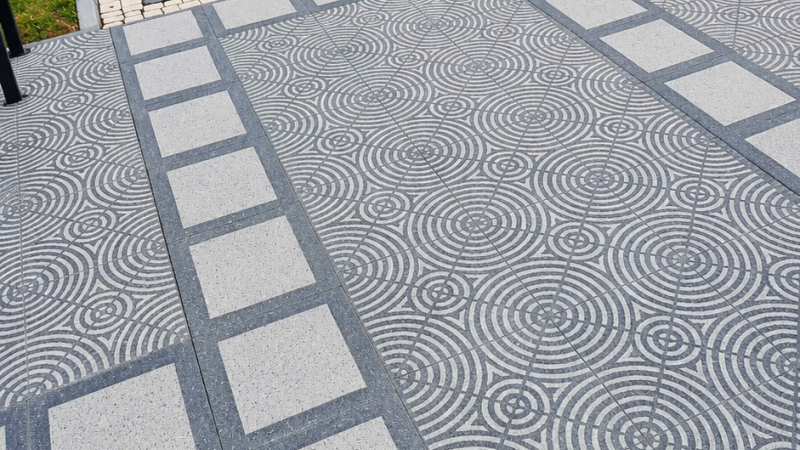
How to Install Garden Paving Tiles: Planning, Measurement and Site Evaluation
Every successful garden paving project begins long before the first paving tile is placed on the ground. Whether you are creating a residential garden pathway, a luxury villa landscape, a courtyard, a public walkway, or a decorative outdoor living space, proper planning is the foundation of durability, drainage performance, visual appeal, and long-term value.
Many paving failures are not caused by the paving stones themselves. Instead, they originate from poor site evaluation, inaccurate measurements, insufficient drainage planning, weak subgrade preparation, or incorrect material calculations. Professional paving contractors understand that the quality of the finished surface depends on the quality of the preparation beneath it.
This guide explains how experienced paving professionals evaluate a site before installation begins. You will learn how to measure a paving area, assess soil conditions, calculate quantities, identify drainage challenges, estimate logistics requirements, and prepare for a successful garden paving installation.
Why Planning Matters Before Installing Garden Paving Tiles
Professional landscaping projects rarely fail because of the paving tiles themselves. Most failures originate from planning mistakes made before installation begins. For example, a paving area that appears perfectly flat may actually contain drainage issues. Similarly, a pathway that seems structurally sound may contain weak soil conditions underneath.
When these issues are ignored, problems often appear months later. Surface settlement, standing water, joint movement, edge separation, and uneven walking surfaces are among the most common symptoms of poor planning.
Investing time in site evaluation helps avoid costly repairs and ensures the paving installation performs as intended for many years.
Step 1: Measuring the Project Area
The first task in any paving project is determining the exact area that will be covered. This information influences material quantities, labor requirements, delivery logistics, project duration, and budgeting.
Most rectangular areas can be calculated using a simple formula:
Area = Length × Width
For example:
- Length: 12 meters
- Width: 8 meters
- Total Area: 96 square meters
However, many garden layouts are irregular. Curves, planting beds, retaining walls, decorative features, and existing structures may require the project to be divided into multiple sections.
Professional estimators often break a project into smaller geometric zones and combine the results to obtain a more accurate total area.
Step 2: Evaluating Soil Conditions
Soil assessment is one of the most overlooked aspects of paving installation. The ground beneath the paving system ultimately supports every load applied to the finished surface.
Different soil types behave differently under pressure and moisture. Clay soils can expand and contract significantly, while sandy soils often provide better drainage but may require stabilization. Organic soils generally need removal because they continue to decompose and settle over time.
A proper site inspection should identify:
- Existing soil type
- Moisture content
- Compaction quality
- Organic material presence
- Root systems
- Previous construction activity
Step 3: Understanding Drainage Requirements
Water is one of the most important considerations in any outdoor paving project. Without proper drainage, even a visually attractive installation can experience long-term problems.
Rainwater should move away from buildings, door thresholds, retaining walls, and other sensitive structures. Drainage planning begins during site evaluation rather than after installation.
Professional installers typically identify:
- Existing water flow paths
- Low points where water collects
- Building protection requirements
- Stormwater discharge routes
- Potential erosion risks
Step 4: Material Planning
Once measurements and site conditions are understood, the next stage involves calculating material quantities. This includes paving units, aggregate base layers, bedding sand, jointing material, edge restraints, and transportation requirements.
Accurate planning helps reduce waste, improves scheduling, and allows contractors to coordinate deliveries efficiently.
Professional estimation systems often evaluate:
- Total paving area
- Aggregate volume
- Bedding sand volume
- Joint filling materials
- Pallet quantities
- Transport requirements
- Installation labor
MT-Altaş ProMetraj V21.3 Planning Approach
Modern paving projects increasingly rely on digital planning systems. MT-Altaş ProMetraj V21.3 represents a workflow focused on evaluating measurements, materials, transportation requirements, and installation planning before construction begins.
Rather than viewing paving solely as a surface material, the system evaluates the entire installation process, including quantities, logistics, and site preparation requirements.
This approach helps project planners understand potential costs, material requirements, and operational challenges before work starts.
Common Planning Mistakes
- Estimating area without accurate measurements
- Ignoring drainage conditions
- Assuming all soil behaves the same way
- Ordering materials without waste allowances
- Failing to consider delivery access
- Neglecting edge restraint planning
- Underestimating aggregate requirements
Key Takeaways
The success of a garden paving installation begins with planning. Accurate measurements, soil evaluation, drainage analysis, and material estimation create the foundation for every subsequent stage of construction.
Before aggregate placement, sand screeding, joint filling, or final compaction occur, the site must first be understood. Professional planning minimizes risk, improves efficiency, and contributes directly to long-term pavement performance.
In Chapter 2, we will examine ground preparation and soil engineering techniques, including excavation depth, subgrade stabilization, compaction principles, and load-bearing requirements for residential and commercial paving installations.
Ground Preparation and Soil Engineering for Garden Paving Installations
A paving project is only as strong as the ground beneath it. Many paving failures that appear to be surface problems are actually caused by weaknesses hidden below the finished installation. Settlement, uneven surfaces, standing water, edge movement, and cracked paving systems often originate from inadequate ground preparation rather than the paving materials themselves.
Professional paving contractors understand that soil engineering is the true foundation of long-term performance. Before aggregate placement, bedding sand installation, or tile positioning begins, the existing ground must be evaluated, prepared, stabilized, and compacted correctly.
This chapter explains the principles of excavation, soil assessment, compaction, stabilization, moisture control, and load distribution used in professional outdoor paving projects.
Why Ground Preparation Matters
The subgrade is the natural soil beneath the paving structure. Every load applied to the finished surface eventually transfers through the paving units, through the aggregate foundation, and ultimately into the subgrade.
If the subgrade cannot support those loads, the entire system becomes vulnerable to settlement. This is why professional contractors focus on the soil before focusing on the paving itself.
A well-prepared subgrade performs several important functions:
- Supports structural loads
- Reduces settlement risk
- Improves drainage performance
- Provides long-term stability
- Minimizes maintenance requirements
- Improves overall pavement lifespan
Understanding Existing Soil Conditions
Not all soils behave the same way. The first stage of professional ground preparation involves understanding what lies beneath the project area. Different soil types respond differently to moisture, compaction, loading, and seasonal changes.
Clay Soils
Clay retains water and can expand significantly when wet. During dry periods it may shrink and create movement beneath the paving system. Projects built on clay often require additional stabilization and careful moisture management.
Sandy Soils
Sand generally drains well and can provide a relatively stable foundation. However, loose sandy soils may require compaction and confinement to prevent movement.
Silty Soils
Silt can become unstable when saturated. Poor drainage conditions often create problems in silty environments, making water management especially important.
Organic Soils
Organic materials such as roots, vegetation, peat, and decomposing matter should generally be removed. Organic materials continue to break down over time and often cause settlement.
Excavation Principles
Excavation creates space for the structural layers that will support the finished paving surface. The required depth depends on several factors including:
- Expected loads
- Soil conditions
- Climate
- Drainage requirements
- Paving thickness
- Aggregate depth
A common mistake is excavating only enough depth for the paving tiles themselves. Professional installations require sufficient space for every layer within the pavement system.
Removing Weak Materials
Excavation is not simply about creating depth. It also provides an opportunity to remove weak, unstable, or unsuitable materials.
Contractors typically remove:
- Topsoil
- Organic matter
- Vegetation
- Roots
- Soft pockets
- Debris
- Uncontrolled fill
Failure to remove unsuitable materials often leads to future settlement.
Subgrade Stabilization Techniques
Some soils naturally provide adequate support. Others require improvement before aggregate placement begins. Professional stabilization methods vary depending on site conditions.
Mechanical Stabilization
Mechanical stabilization improves soil performance through compaction. Compaction reduces air voids, increases density, and improves load-bearing capacity.
Aggregate Improvement
Additional aggregate material may be introduced to improve weak zones and distribute loads more effectively.
Geosynthetic Reinforcement
In challenging conditions, geotextiles or geogrids may be used to improve separation and load distribution. These systems can enhance long-term stability in weak soils.
The Science of Compaction
Compaction is one of the most critical activities in pavement construction. The objective is to increase soil density and reduce future movement.
Compaction works by reducing air spaces within the soil structure. As density increases, the soil becomes more capable of supporting loads without deformation.
Professional compaction often occurs in multiple lifts rather than one thick layer. This ensures uniform density throughout the depth of the prepared ground.
Moisture Management During Compaction
Moisture content significantly influences compaction effectiveness. Excessively dry soil may resist compaction, while overly wet soil may become unstable.
Experienced contractors monitor moisture conditions throughout preparation activities. Proper moisture levels help achieve maximum density and improve overall performance.
Load Distribution Fundamentals
The objective of the pavement structure is not simply to support loads directly beneath each paving unit. Instead, the pavement spreads loads over a wider area.
This load distribution process reduces stress on the subgrade and helps prevent localized failure. Aggregate foundations play a major role in distributing forces throughout the pavement system.
The stronger the subgrade and aggregate foundation, the more effectively loads can be distributed.
Site Access Considerations
Ground preparation also includes evaluating access routes for equipment, material deliveries, and construction operations.
Limited access may influence:
- Equipment selection
- Material delivery schedules
- Labor requirements
- Project duration
- Logistics planning
How MT-Altaş ProMetraj V21.3 Supports Ground Planning
Professional paving projects require more than visual design. Accurate planning depends on understanding soil conditions, aggregate requirements, transport logistics, and material quantities.
MT-Altaş ProMetraj V21.3 supports project evaluation workflows by helping planners assess:
- Total excavation volumes
- Aggregate requirements
- Material quantities
- Transportation planning
- Installation sequencing
- Resource allocation
This structured planning approach helps improve efficiency before installation begins.
Common Ground Preparation Mistakes
- Installing directly over topsoil
- Ignoring weak soil zones
- Insufficient excavation depth
- Poor compaction practices
- Failure to manage moisture conditions
- Inadequate aggregate planning
- Ignoring drainage concerns
Chapter 2 Summary
Ground preparation is the hidden engineering system beneath every successful paving project. Excavation, soil assessment, stabilization, compaction, and moisture management collectively determine long-term pavement performance.
Professional installers understand that strong paving begins below the surface. The visible paving tiles represent only a small portion of the overall pavement structure.
In Chapter 3, we will examine aggregate base engineering, load transfer mechanics, foundation thickness considerations, material selection, and professional compaction techniques used in high-performance paving systems.
Aggregate Base Engineering and Load Distribution for Garden Paving Systems
Beneath every durable garden paving installation lies a structural foundation that most people never see. While decorative paving tiles receive the visual attention, the aggregate base layer performs the majority of the engineering work. Without a properly designed aggregate foundation, even premium paving products may experience settlement, movement, drainage problems, and structural failure.
Professional paving systems rely on aggregate materials to distribute loads, stabilize the subgrade, improve drainage performance, and create a long-lasting structural platform. The aggregate layer acts as the backbone of the entire pavement structure.
This chapter explores aggregate engineering principles, material selection, load transfer mechanics, compaction methods, layer thickness considerations, and foundation design strategies used in professional paving installations.
What Is an Aggregate Base Layer?
The aggregate base layer is a compacted structural foundation placed between the prepared subgrade and the bedding layer. Its purpose is to create a stable platform capable of supporting loads while distributing stress over a wider area.
Aggregate materials typically consist of crushed stone, graded rock, or engineered granular materials designed to interlock during compaction. When properly installed, the aggregate foundation becomes a strong structural component that significantly improves pavement performance.
Why Aggregate Foundations Are Essential
Without a properly engineered aggregate base, loads from pedestrians, vehicles, landscaping equipment, and environmental forces concentrate directly on the soil beneath. Over time, this concentrated loading may cause settlement and deformation.
A compacted aggregate layer helps:
- Increase structural capacity
- Improve drainage performance
- Reduce settlement risks
- Distribute loads efficiently
- Protect weaker soils
- Improve pavement lifespan
- Minimize maintenance requirements
Understanding Load Distribution
One of the most important engineering functions of aggregate is load distribution. When a force is applied to the pavement surface, the aggregate foundation spreads that force over a larger area.
Instead of concentrating pressure at a single point, the aggregate layer gradually transfers loads downward through the pavement structure. This process reduces stress on the subgrade and improves long-term stability.
The thicker and better compacted the aggregate foundation, the more effectively loads can be distributed.
Aggregate Interlock and Structural Strength
Aggregate foundations derive much of their strength from particle interlock. Angular crushed stone particles lock together during compaction, creating a stable matrix capable of resisting movement.
Rounded particles generally provide less interlock and may offer reduced structural performance. For this reason, engineered paving systems frequently utilize crushed aggregates rather than naturally rounded materials.
Aggregate Thickness Considerations
Foundation thickness depends on several factors:
- Expected loading conditions
- Subgrade strength
- Climate conditions
- Drainage requirements
- Pavement design objectives
- Local construction standards
Residential garden pathways often require different structural capacities than driveways, plazas, commercial walkways, or service roads. Professional design evaluates site-specific conditions rather than relying on a single universal thickness.
The Role of Drainage Within Aggregate Layers
Aggregate foundations do more than support loads. They also contribute significantly to drainage performance.
The interconnected void structure within aggregate layers can facilitate water movement, helping reduce moisture accumulation beneath the pavement. Effective drainage improves structural performance and minimizes seasonal movement risks.
Poor drainage is one of the leading causes of pavement deterioration. Proper aggregate design helps address this challenge.
Compaction of Aggregate Materials
Compaction transforms loose aggregate into a structural foundation. During compaction, particles move into more stable positions, reducing voids and increasing density.
Professional compaction operations frequently occur in multiple lifts rather than placing the entire depth at once. This helps ensure uniform density throughout the foundation.
The objectives of aggregate compaction include:
- Improved load capacity
- Reduced settlement potential
- Increased structural stability
- Better long-term performance
- Enhanced resistance to movement
Layer-by-Layer Construction Principles
Experienced paving contractors typically build aggregate foundations in controlled layers. Each layer is placed, graded, and compacted before the next layer is added.
This approach provides greater quality control and helps achieve consistent density throughout the foundation profile.
Attempting to compact excessive thicknesses at once often results in uneven density and reduced performance.
Aggregate Quality and Material Selection
Not all aggregates are identical. Material selection influences structural behavior, drainage performance, compaction efficiency, and durability.
Professional material evaluation may consider:
- Particle size distribution
- Durability characteristics
- Compaction properties
- Drainage behavior
- Load-bearing capacity
- Local availability
Selecting appropriate materials is an essential component of successful pavement engineering.
Environmental Forces and Aggregate Foundations
Outdoor paving systems must resist a variety of environmental influences. Rainfall, temperature fluctuations, freeze-thaw cycles, seasonal moisture changes, and biological activity all affect pavement performance.
A properly engineered aggregate foundation helps the pavement system respond more effectively to these environmental stresses.
The foundation serves as a buffer between natural ground movement and the visible paving surface.
How Aggregate Foundations Support Surface Appearance
Many people associate aggregate foundations with structural performance alone. However, foundation quality also influences appearance.
Uneven settlement can create:
- Surface depressions
- Raised sections
- Joint separation
- Pattern distortion
- Trip hazards
- Drainage problems
By reducing settlement risks, aggregate engineering helps preserve both functionality and aesthetics.
Logistics and Material Planning
Aggregate foundations often represent one of the largest material quantities within a paving project. Accurate planning is therefore essential.
Professional estimators typically evaluate:
- Total excavation volume
- Aggregate requirements
- Transportation needs
- Equipment requirements
- Delivery scheduling
- Compaction operations
Proper planning helps avoid delays, shortages, and unnecessary costs.
MT-Altaş ProMetraj V21.3 and Aggregate Planning
Modern paving projects increasingly utilize digital planning workflows. MT-Altaş ProMetraj V21.3 supports evaluation processes related to aggregate quantities, transportation requirements, project logistics, and installation planning.
This planning methodology allows project teams to better understand resource requirements before construction begins.
By evaluating foundation quantities early, planners can improve scheduling efficiency and reduce project uncertainty.
Common Aggregate Foundation Mistakes
- Insufficient aggregate depth
- Poor compaction practices
- Inadequate drainage planning
- Using unsuitable materials
- Ignoring weak subgrade conditions
- Uneven aggregate placement
- Lack of quality control during construction
Chapter 3 Summary
Aggregate foundations are the structural core of professional paving systems. Their role extends beyond simple support, influencing load distribution, drainage, durability, appearance, and long-term performance.
When aggregate materials are properly selected, placed, and compacted, they create a stable platform capable of supporting paving systems for many years.
In Chapter 4, we will explore bedding sand engineering, leveling techniques, screeding methods, moisture control, particle behavior, and precision surface preparation before paving installation begins.
Bedding Sand Engineering and Precision Surface Leveling for Garden Paving Installations
After the aggregate foundation has been properly constructed and compacted, the next critical stage involves creating a perfectly controlled bedding layer. While many property owners focus on paving tiles, experienced paving engineers understand that the bedding layer is one of the most important components of the entire pavement structure.
The bedding layer serves as the interface between the structural aggregate foundation and the visible paving surface. Its primary purpose is not structural support. Instead, it provides precise leveling, elevation control, surface uniformity, and load transfer consistency across the installation.
When installed correctly, the bedding layer helps create a smooth, stable, and visually attractive finished pavement. When installed incorrectly, it can lead to settlement, rocking pavers, uneven surfaces, poor drainage, and long-term performance problems.
What Is Bedding Sand?
Bedding sand is a carefully prepared layer installed between the aggregate foundation and the paving surface. Its primary purpose is to provide a uniform bedding plane that supports the paving units evenly across the installation.
Contrary to popular belief, bedding sand is not intended to compensate for poor aggregate construction. If the aggregate foundation contains irregularities, the bedding layer should not be excessively thickened to hide those imperfections.
Professional paving systems rely on aggregate engineering for structural support and use the bedding layer primarily for precision adjustment and surface preparation.
The Engineering Function of Bedding Sand
The bedding layer performs several important tasks simultaneously.
- Provides a uniform support surface
- Allows minor elevation adjustments
- Improves paving alignment
- Assists load transfer
- Supports interlocking behavior
- Helps achieve design elevations
- Contributes to visual consistency
Without a properly prepared bedding layer, the paving surface may not perform as intended regardless of material quality.
Why Uniform Thickness Matters
One of the most important principles in bedding layer construction is maintaining consistent thickness throughout the project area.
Large thickness variations create uneven support conditions beneath the paving surface. Areas with excessive bedding material may compress differently over time, resulting in localized settlement and surface distortion.
Uniform thickness helps distribute loads consistently and improves overall pavement stability.
Screeding and Surface Accuracy
Screeding is the process of creating a perfectly level bedding surface before paving installation begins.
Professional contractors use screeding guides and leveling systems to achieve highly accurate elevations. This process helps establish the final grade, drainage direction, and surface smoothness required for successful paving installations.
Precision screeding reduces installation errors and improves finished surface quality.
Drainage Considerations During Bedding Preparation
The bedding layer must support the overall drainage strategy established during earlier planning stages.
Surface water should move efficiently toward designated drainage paths without pooling on the finished pavement.
Even minor elevation errors can disrupt drainage performance and create long-term maintenance concerns.
Material Characteristics
Professional paving systems rely on carefully selected bedding materials with predictable performance characteristics.
Material properties may influence:
- Compaction behavior
- Drainage performance
- Particle stability
- Load transfer efficiency
- Surface consistency
- Long-term durability
Material quality plays a major role in achieving reliable installation results.
Load Transfer Through the Bedding Layer
Although the aggregate foundation carries most structural loads, the bedding layer contributes to load distribution by ensuring uniform support beneath the paving units.
A properly prepared bedding layer helps reduce stress concentrations and improves interaction between paving units and the foundation system.
This balanced load transfer contributes to long-term pavement stability.
Moisture Control During Installation
Moisture conditions can significantly influence bedding material behavior during installation.
Excessive moisture may affect workability and leveling accuracy, while excessively dry conditions can make precise shaping more difficult.
Professional installers continuously monitor environmental conditions and adjust construction practices accordingly.
Precision Elevation Management
Modern paving projects frequently require strict elevation control to ensure compatibility with buildings, landscaping elements, drainage structures, and accessibility requirements.
The bedding layer plays a critical role in achieving these final elevations.
Careful planning during this stage helps prevent costly corrections later in the installation process.
Supporting Aesthetic Quality
Visual appearance is closely connected to bedding layer quality. Even small inconsistencies in elevation can become highly visible once paving installation is complete.
Professional screeding practices help achieve:
- Smooth walking surfaces
- Consistent joint alignment
- Uniform visual appearance
- Accurate slope transitions
- Improved drainage performance
How MT-Altaş ProMetraj V21.3 Assists Bedding Layer Planning
Accurate material planning is essential for efficient paving installation. MT-Altaş ProMetraj V21.3 supports planning workflows related to surface preparation, material quantities, project logistics, and installation sequencing.
Project teams can evaluate:
- Total paving area
- Foundation requirements
- Bedding material quantities
- Transportation planning
- Resource allocation
- Construction scheduling
This structured planning approach improves efficiency before construction activities begin.
Common Bedding Layer Mistakes
- Using bedding material to correct aggregate defects
- Excessive bedding thickness
- Poor screeding accuracy
- Ignoring drainage elevations
- Inconsistent material placement
- Inadequate quality control
- Improper moisture management
Bedding Layer Quality Checklist
- Aggregate foundation completed
- Drainage slopes verified
- Elevation control established
- Material quality confirmed
- Screeding guides installed
- Uniform thickness maintained
- Surface inspected before paving begins
Chapter 4 Summary
The bedding layer is one of the most important precision-engineering components of any paving system. While the aggregate foundation provides structural support, the bedding layer creates the accurate, uniform platform necessary for successful paving installation.
Proper material selection, controlled thickness, precise screeding, and effective moisture management all contribute to long-term pavement performance and visual quality.
In Chapter 5, we will examine professional paving tile installation techniques, pattern alignment, laying procedures, cutting operations, interlock behavior, and quality-control practices used in high-performance garden paving systems.
Professional Garden Paving Tile Installation: Layout, Alignment and Interlock Engineering
After the subgrade has been stabilized, the aggregate foundation compacted, and the bedding layer screeded to precise elevations, the project enters the stage most property owners recognize as paving installation.
However, professional paving installation involves far more than simply placing paving units on a prepared surface. Successful installations require careful alignment control, pattern consistency, joint management, load distribution planning, edge integration, and quality assurance procedures.
This chapter explains how professional contractors install paving tiles to achieve structural integrity, visual consistency, drainage performance, and long-term durability.
Understanding Paving Layout Planning
Before placing the first paving unit, professional installers establish a layout strategy. Layout planning ensures the finished surface remains visually balanced, structurally stable, and compatible with site geometry.
Poor layout planning often results in awkward cuts, inconsistent joint spacing, pattern distortion, and reduced visual quality.
Professional layout planning evaluates:
- Pattern orientation
- Visual focal points
- Traffic flow direction
- Drainage alignment
- Edge conditions
- Cutting requirements
- Joint consistency
Reference Lines and Control Points
Professional installers rarely begin placing paving units without establishing reference lines. Reference lines provide a guide for maintaining alignment throughout the installation process.
These control lines help ensure that patterns remain straight, joints remain consistent, and dimensional accuracy is maintained across large areas.
Even small alignment errors can become highly visible when repeated over long distances.
Tile Placement Techniques
Paving units are generally installed directly onto the prepared bedding surface according to the selected pattern layout.
Each unit should be positioned carefully to maintain consistent spacing and proper contact with adjacent units.
The objective is to create a uniform surface that functions as an integrated paving system rather than a collection of individual components.
The Importance of Interlock
Interlock is one of the most important engineering principles in paving construction. When paving units interact correctly, loads can be transferred between neighboring units rather than being concentrated at a single point.
This load-sharing mechanism significantly improves structural performance and reduces stress concentrations.
Professional paving systems rely on:
- Horizontal interlock
- Vertical support
- Joint interaction
- Edge restraint integration
Pattern Selection and Performance
The selected paving pattern influences both appearance and structural behavior. Different layouts may provide varying levels of load distribution and visual impact.
Professional designers often consider:
- Architectural style
- Traffic patterns
- Project scale
- Visual continuity
- Maintenance considerations
Pattern selection should balance aesthetics and functionality.
Maintaining Joint Consistency
Joint spacing plays a critical role in paving performance. Consistent joints contribute to load transfer, interlocking behavior, and overall visual quality.
Irregular spacing may create weak zones, alignment issues, and aesthetic inconsistencies.
Professional installers continuously monitor joint uniformity throughout construction.
Cutting Operations and Edge Integration
Most paving projects require some degree of cutting to accommodate curves, borders, drainage structures, landscape features, and property boundaries.
Cutting operations should be planned strategically to minimize waste while maintaining visual balance.
Professional edge integration helps ensure that cut units remain visually consistent with the overall pattern.
Managing Surface Elevations During Installation
Even after the bedding layer has been screeded, installers continue monitoring elevations during paving placement.
Quality control checks help ensure:
- Smooth walking surfaces
- Correct drainage slopes
- Consistent transitions
- Proper alignment
- Visual uniformity
Elevation control remains essential throughout installation.
Load Transfer Across the Pavement Surface
A professionally installed paving system behaves as an integrated structure. When loads are applied to one area, forces are distributed across multiple paving units.
This cooperative behavior improves structural efficiency and helps reduce localized stress.
Interlocking systems achieve superior performance when supported by properly prepared foundations and consistent joint spacing.
Weather Considerations During Installation
Environmental conditions can influence installation quality. Temperature, precipitation, moisture conditions, and site exposure all affect construction activities.
Professional contractors evaluate weather forecasts and adjust installation schedules when necessary.
Proper planning helps maintain quality standards throughout the project.
Visual Quality Control
Appearance is a major factor in paving success. Professional installers routinely inspect completed sections to identify:
- Alignment deviations
- Pattern inconsistencies
- Surface irregularities
- Color distribution concerns
- Joint spacing variations
Continuous inspection helps prevent small issues from becoming larger problems later.
How MT-Altaş ProMetraj V21.3 Supports Installation Planning
Modern paving projects require accurate planning before installation begins. MT-Altaş ProMetraj V21.3 supports workflows related to material estimation, layout planning, pallet calculations, logistics management, and installation sequencing.
Project teams can evaluate:
- Total paving quantities
- Material distribution
- Transportation planning
- Pallet requirements
- Installation scheduling
- Resource allocation
These planning processes improve efficiency and reduce uncertainty throughout construction.
Common Installation Mistakes
- Ignoring reference lines
- Poor joint consistency
- Incorrect pattern alignment
- Insufficient quality control
- Improper edge integration
- Excessive cutting waste
- Failure to monitor elevations
Installation Quality Checklist
- Reference lines established
- Pattern approved
- Joint spacing consistent
- Surface elevations verified
- Drainage slopes maintained
- Cut units properly integrated
- Visual inspection completed
Chapter 5 Summary
Professional paving installation combines engineering principles with visual craftsmanship. Proper layout planning, alignment control, interlocking behavior, joint management, and quality assurance all contribute to successful long-term pavement performance.
A paving surface should function as a unified system rather than a collection of individual units. Achieving that goal requires precision throughout the installation process.
In Chapter 6, we will explore drainage engineering and water management strategies, including slope design, runoff control, permeability considerations, surface water movement, and long-term moisture protection for outdoor paving systems.
Drainage Engineering and Water Management for Professional Garden Paving Systems
Water is the single most destructive force affecting outdoor paving installations. Many paving failures that appear to be structural problems are actually drainage failures in disguise. Settlement, joint erosion, edge movement, frost damage, algae growth, and premature deterioration frequently originate from inadequate water management rather than material defects.
Professional paving engineers understand that water must be controlled before, during, and after installation. A successful paving system is not simply designed to support loads. It is also designed to manage rainfall, runoff, moisture migration, and seasonal environmental changes.
This chapter examines drainage engineering principles, surface water management, slope design, runoff control, permeability considerations, moisture protection strategies, and long-term pavement performance.
Why Drainage Is Critical in Paving Design
Water affects every layer of a paving system. Surface runoff influences pedestrian safety, while subsurface moisture can weaken foundations and reduce long-term structural performance.
A properly engineered drainage system protects:
- Paving units
- Jointing materials
- Bedding layers
- Aggregate foundations
- Subgrade soils
- Adjacent buildings
- Landscape features
Without effective drainage, even premium paving materials may experience premature deterioration.
Understanding Surface Water Movement
Whenever rainfall occurs, water seeks the lowest available elevation. If a paving surface does not provide a clear path for runoff, water may accumulate and create long-term maintenance problems.
Professional paving design therefore begins by understanding how water currently moves across the site and how it should move after installation.
Surface drainage planning is one of the earliest stages of successful project design.
Slope Design Principles
Drainage performance depends heavily on slope design. A properly graded surface encourages water to move away from sensitive areas while maintaining a comfortable and visually attractive finished appearance.
Professional slope design considers:
- Building protection
- Runoff direction
- Accessibility requirements
- Landscape integration
- Drainage infrastructure
- Long-term maintenance
The objective is to move water efficiently without creating visual or functional concerns.
Protecting Building Structures
One of the most important goals of drainage engineering is protecting nearby structures.
Poor drainage can direct water toward:
- Building foundations
- Basements
- Entryways
- Garage openings
- Retaining walls
- Outdoor living spaces
Professional paving systems direct water away from these vulnerable areas.
Runoff Collection Systems
Large paving areas often require dedicated runoff collection strategies. Depending on project requirements, drainage systems may include channels, collection points, infiltration zones, or other water management features.
Effective collection systems reduce erosion risks and improve overall site performance.
Moisture and Foundation Stability
Excessive moisture beneath a paving system can weaken soil strength and reduce structural stability.
When soils become saturated, their ability to support loads may decline significantly. This condition can contribute to settlement, rutting, and pavement movement.
Proper drainage helps preserve the integrity of the entire pavement structure.
Freeze-Thaw Considerations
In colder climates, water management becomes even more important. Moisture trapped within pavement systems may expand when frozen and contract during thaw cycles.
Repeated freeze-thaw activity can contribute to:
- Surface movement
- Joint disruption
- Foundation instability
- Edge displacement
- Accelerated deterioration
Effective drainage reduces the amount of trapped moisture and improves seasonal performance.
Permeability and Water Infiltration
Modern paving design increasingly considers how water enters and exits pavement systems. Permeability influences environmental performance, drainage efficiency, and moisture control.
Project objectives may determine whether water should:
- Run off the surface
- Be collected
- Infiltrate naturally
- Be redirected elsewhere
Professional design balances site conditions, environmental requirements, and long-term performance goals.
Erosion Prevention Strategies
Uncontrolled runoff can create erosion around paving systems and surrounding landscapes. Over time, erosion may undermine edges, expose foundations, and damage adjacent features.
Drainage planning therefore extends beyond the pavement itself and considers the entire site environment.
Water Management During Construction
Drainage considerations are important even before installation is complete. Unexpected rainfall during construction can affect compaction quality, bedding preparation, and material performance.
Professional contractors monitor weather conditions and implement temporary water-control measures when necessary.
Long-Term Maintenance and Drainage
Drainage systems should be evaluated periodically after installation. Leaves, sediment, vegetation, and debris may reduce effectiveness over time.
Routine inspection helps maintain:
- Runoff efficiency
- Surface appearance
- Structural performance
- Safety conditions
- Foundation protection
Preventive maintenance often reduces future repair costs.
How MT-Altaş ProMetraj V21.3 Supports Drainage Planning
Professional paving projects require coordinated planning across multiple disciplines. MT-Altaş ProMetraj V21.3 supports workflows related to site measurement, material estimation, logistics evaluation, and drainage-oriented planning strategies.
Project teams can assess:
- Total project area
- Elevation transitions
- Material requirements
- Foundation quantities
- Transport planning
- Installation sequencing
These evaluations help improve project predictability before construction begins.
Common Drainage Mistakes
- Ignoring runoff direction
- Insufficient slope planning
- Poor collection system design
- Allowing water to reach foundations
- Overlooking erosion risks
- Neglecting maintenance access
- Failing to evaluate site topography
Drainage Quality Checklist
- Surface runoff path identified
- Drainage slope verified
- Building protection confirmed
- Collection strategy established
- Foundation protection evaluated
- Maintenance access planned
- Water management reviewed before installation
Chapter 6 Summary
Drainage engineering is one of the most important components of professional paving design. Effective water management protects foundations, preserves structural integrity, improves safety, and extends pavement lifespan.
A successful paving system is not only designed to support loads. It is also designed to control water throughout its service life.
In Chapter 7, we will examine edge restraints, border engineering, perimeter stability systems, lateral load control, and long-term paving confinement strategies used in professional outdoor paving installations.
Edge Restraints and Border Engineering: The Hidden Structural System Behind Long-Lasting Garden Paving
Most homeowners focus on paving stones, colors, textures, and patterns when planning an outdoor paving project. However, experienced paving engineers know that one of the most important structural components of any paving installation is often the least visible element: the edge restraint system.
Without proper edge restraint engineering, even a perfectly constructed paving surface can gradually lose alignment. Over time, paving units may spread outward, joints may widen, edges may settle, and the entire pavement structure can become unstable.
This chapter explains how edge restraints function, why border systems are critical to pavement performance, how lateral forces affect paving installations, and how professional contractors create long-term perimeter stability.
What Is an Edge Restraint System?
An edge restraint is a structural element installed along the perimeter of a paving system. Its purpose is to prevent horizontal movement and maintain the integrity of the pavement structure throughout its service life.
Without confinement, paving units naturally attempt to move outward under traffic loads, environmental influences, thermal expansion, and settlement forces.
Edge restraints resist these forces and help maintain the original pavement geometry.
Why Edge Restraints Are Essential
A paving system functions as a network of interconnected units. Interlock allows loads to be distributed across multiple paving elements.
However, interlock depends on confinement. If perimeter support is removed, the interlocking system gradually weakens.
Professional edge restraints help:
- Prevent lateral movement
- Maintain interlock performance
- Reduce settlement risk
- Improve structural stability
- Preserve visual alignment
- Increase pavement lifespan
- Protect pavement edges
Understanding Lateral Forces
Every paving system experiences horizontal forces. These forces originate from pedestrian traffic, landscaping equipment, maintenance vehicles, environmental conditions, and natural ground movement.
Although these forces may seem insignificant individually, their cumulative effect over many years can be substantial.
Professional edge systems are designed specifically to resist these lateral loads.
Border Engineering and Visual Design
Border systems serve both structural and aesthetic purposes.
From a design perspective, borders create visual definition and help organize paving patterns within a landscape.
From an engineering perspective, borders contribute to:
- Perimeter stability
- Pattern retention
- Load transfer support
- Edge protection
- Movement control
Maintaining Interlock Through Confinement
Interlocking pavements rely on confinement to function properly. The paving units transfer forces between one another, but those forces must ultimately be contained at the pavement boundary.
When confinement is insufficient, joints may widen and paving units may shift over time.
Professional edge systems preserve interlocking behavior throughout the pavement structure.
Edge Stability and Drainage Performance
Edge restraints also influence drainage performance. Poorly designed borders may trap water, create erosion concerns, or contribute to localized settlement.
Professional drainage planning therefore considers both pavement interiors and perimeter conditions.
An effective paving system manages water movement across the entire project area.
Protecting Against Settlement
Settlement frequently begins at pavement edges where support conditions differ from interior sections.
Proper border engineering helps minimize these risks by creating a more stable transition between the pavement structure and surrounding landscape.
This improves long-term performance and visual appearance.
Integrating Borders with Landscape Design
Modern paving projects often incorporate landscaping features such as planting areas, retaining walls, decorative stone zones, lighting systems, and garden structures.
Edge restraint systems help create smooth transitions between these elements while maintaining structural continuity.
Good engineering and attractive design should work together rather than compete.
Long-Term Maintenance Benefits
Well-designed edge restraints reduce future maintenance requirements.
Benefits include:
- Reduced joint movement
- Improved alignment retention
- Lower repair frequency
- Better drainage consistency
- Enhanced visual appearance
- Longer pavement lifespan
Many successful paving projects remain stable for years because their perimeter systems were engineered correctly from the beginning.
Quality Control During Border Installation
Professional contractors inspect border systems carefully during installation. Quality-control procedures often evaluate:
- Alignment accuracy
- Elevation consistency
- Structural support
- Drainage compatibility
- Confinement effectiveness
- Visual integration
Attention to detail during installation significantly influences long-term results.
How MT-Altaş ProMetraj V21.3 Supports Border Planning
Accurate perimeter planning is an important component of paving design. MT-Altaş ProMetraj V21.3 supports project evaluation workflows involving border quantities, material estimation, transportation planning, installation sequencing, and resource allocation.
Project teams can assess:
- Border lengths
- Material requirements
- Transportation needs
- Labor planning
- Installation schedules
- Project logistics
These planning tools help improve project efficiency before construction begins.
Common Edge Restraint Mistakes
- Ignoring perimeter confinement
- Weak border integration
- Poor drainage at edges
- Inconsistent alignment
- Insufficient structural support
- Neglecting long-term movement
- Improper connection to landscape features
Edge Engineering Checklist
- Perimeter layout verified
- Border alignment checked
- Drainage compatibility confirmed
- Confinement system installed
- Structural support reviewed
- Visual quality inspected
- Long-term stability evaluated
Chapter 7 Summary
Edge restraints are one of the most important structural components of a paving system. They provide confinement, maintain interlock performance, protect borders, and help ensure long-term pavement stability.
While often overlooked by property owners, professional paving engineers understand that successful projects depend on strong perimeter support as much as strong foundations.
In Chapter 8, we will examine joint filling, sand stabilization, final compaction procedures, interlock activation, surface finishing, and post-installation performance optimization techniques used in professional paving systems.
Joint Filling, Final Compaction and Interlock Activation in Professional Garden Paving Systems
Many property owners believe that a paving project is complete once the paving units have been placed and aligned. In reality, one of the most critical engineering stages occurs after installation. Joint filling and final compaction transform a collection of individual paving units into a unified structural pavement system.
Without proper joint stabilization, even perfectly aligned paving surfaces may experience movement, loss of interlock, joint widening, settlement, edge displacement, and reduced structural performance over time.
Professional contractors understand that joint filling is not simply a finishing step. It is an essential engineering process that activates the interlocking mechanism responsible for pavement stability.
What Is Joint Filling?
Joint filling is the process of introducing stabilizing material into the spaces between paving units after installation. While joints may appear small, they play an essential role in the structural behavior of the entire pavement system.
The purpose of joint filling is not simply aesthetic. Properly filled joints help create frictional interaction between adjacent paving units and contribute directly to interlock performance.
A pavement without stable joints behaves very differently from a pavement with a fully activated interlocking system.
Why Joint Stabilization Matters
Each paving unit experiences forces during daily use. Pedestrian traffic, maintenance equipment, environmental changes, and natural ground movement all generate stress within the pavement structure.
Joint stabilization helps distribute those forces across multiple paving units instead of concentrating stress at isolated locations.
- Improves load transfer
- Reduces individual unit movement
- Maintains alignment
- Supports edge stability
- Improves structural performance
- Extends pavement lifespan
Understanding Interlock Activation
Interlock is the engineering mechanism that allows paving units to function as a single system.
Before joint stabilization, paving units remain largely independent. After joint filling and compaction, the pavement develops stronger interactions between neighboring units.
This transformation significantly improves structural efficiency and overall pavement performance.
How Load Transfer Works
When a person walks across a paved surface, the load is not carried by a single paving unit alone.
Through joint interaction and interlocking behavior, forces are distributed to neighboring units and ultimately transferred through the pavement structure into the aggregate foundation and prepared subgrade.
Effective load sharing reduces stress concentrations and helps maintain long-term stability.
The Purpose of Final Compaction
Final compaction is one of the most important quality-control procedures in paving construction.
The objective is to settle the paving units into their final positions while simultaneously encouraging joint material to occupy available spaces throughout the pavement surface.
This process improves contact between paving units and activates the interlocking mechanism.
System-Wide Performance Benefits
When joint filling and compaction are performed correctly, the pavement benefits in multiple ways:
- Improved structural stability
- Better load distribution
- Reduced movement
- Enhanced alignment retention
- Greater resistance to settlement
- Improved visual consistency
Maintaining Joint Integrity Over Time
Joint systems should remain stable throughout the pavement's service life. Environmental influences such as rainfall, wind, maintenance activities, and seasonal changes may affect joint conditions over time.
Routine inspections help identify areas requiring maintenance before larger problems develop.
Relationship Between Edge Restraints and Joint Stability
Joint performance depends heavily on edge confinement. Without adequate perimeter support, joint systems may gradually lose effectiveness as paving units move outward.
For this reason, Chapter 7's edge restraint systems and Chapter 8's joint stabilization procedures work together as a unified engineering solution.
Visual Benefits of Proper Joint Filling
Joint stabilization improves more than structural performance. It also contributes to:
- Cleaner appearance
- Consistent paving patterns
- Improved surface uniformity
- Better visual continuity
- Professional finished appearance
A properly stabilized pavement generally appears more refined and complete.
Quality Assurance During Final Compaction
Professional contractors inspect paving surfaces before and after final compaction.
Quality-control evaluations often include:
- Joint consistency
- Surface elevations
- Drainage performance
- Pattern alignment
- Edge stability
- Overall appearance
These inspections help ensure that the pavement performs as intended.
Environmental Considerations
Weather conditions influence the final stages of pavement construction. Moisture, temperature, wind, and seasonal conditions may affect installation procedures and scheduling decisions.
Experienced contractors evaluate environmental conditions throughout the finishing process.
How MT-Altaş ProMetraj V21.3 Supports Finishing Operations
Successful paving projects require accurate planning from initial measurement through final completion. MT-Altaş ProMetraj V21.3 supports workflows involving material estimation, logistics planning, installation sequencing, pallet calculations, transportation evaluation, and project management.
Project teams can review:
- Total paving quantities
- Joint material requirements
- Project logistics
- Installation progress
- Resource allocation
- Completion planning
These planning capabilities improve efficiency throughout the project lifecycle.
Common Joint Stabilization Mistakes
- Incomplete joint filling
- Poor compaction procedures
- Ignoring edge restraint performance
- Inconsistent quality control
- Failure to inspect final elevations
- Insufficient maintenance planning
- Overlooking drainage performance
Final Quality Checklist
- Joint stabilization completed
- Final compaction performed
- Surface alignment verified
- Drainage performance confirmed
- Edge restraints inspected
- Visual quality approved
- Project ready for service
Chapter 8 Summary
Joint filling and final compaction transform individual paving units into a fully functioning pavement system. Through interlock activation, load transfer improves, stability increases, and long-term pavement performance is enhanced.
While often viewed as finishing activities, these procedures are actually critical engineering processes that contribute directly to durability and service life.
In Chapter 9, we will examine the most common paving failures, troubleshooting strategies, repair methods, diagnostic procedures, and preventive maintenance techniques used by professional paving specialists.
Common Garden Paving Failures, Diagnostic Procedures and Professional Repair Strategies
Even the highest-quality paving materials can experience problems if design principles, installation procedures, drainage engineering, or maintenance practices are neglected. Understanding how paving systems fail is essential for preventing costly repairs and extending pavement lifespan.
Professional paving specialists rarely focus solely on visible symptoms. Instead, they investigate the underlying causes that created those symptoms. Successful repairs address root causes rather than surface-level defects.
This chapter examines the most common paving failures, diagnostic methodologies, repair techniques, preventive strategies, and long-term maintenance principles used by professional paving contractors.
Why Paving Systems Fail
Paving failures rarely occur because of a single issue. Most problems develop gradually through a combination of design deficiencies, construction errors, environmental conditions, drainage problems, and maintenance neglect.
Understanding these factors helps property owners identify risks before major repairs become necessary.
Failure Type 1: Surface Settlement
Settlement is one of the most common paving problems. It occurs when underlying support layers lose stability or experience compression.
Visible symptoms may include:
- Depressions in the pavement surface
- Uneven walking areas
- Water accumulation
- Pattern distortion
- Trip hazards
Common Causes
- Insufficient compaction
- Weak subgrade conditions
- Organic material decomposition
- Inadequate aggregate thickness
- Poor excavation practices
Professional Repair Strategy
Successful repairs generally require removal of affected paving units, correction of underlying support deficiencies, reconstruction of the foundation, and reinstallation of paving materials.
Failure Type 2: Water Accumulation
Standing water is usually a drainage problem rather than a paving problem.
Water accumulation may indicate:
- Incorrect slope design
- Settlement-related depressions
- Blocked drainage systems
- Improper surface grading
- Drainage infrastructure deficiencies
Persistent water issues should be addressed quickly because moisture often accelerates other forms of pavement deterioration.
Failure Type 3: Edge Movement
Paving edges frequently experience the highest stress levels within a pavement system.
Common symptoms include:
- Spreading borders
- Joint widening
- Edge settlement
- Loss of alignment
- Visible displacement
These issues often indicate inadequate edge restraint performance.
Failure Type 4: Joint Erosion
Joint systems play an essential role in pavement stability. When joint materials are lost, the interlocking mechanism weakens and paving performance declines.
Potential causes include:
- Water erosion
- Wind exposure
- Improper maintenance
- Insufficient stabilization
- Heavy cleaning operations
Maintaining joint integrity is critical for long-term performance.
Failure Type 5: Surface Movement
Paving units should function as a unified system. Visible movement may indicate problems with interlock activation, edge confinement, foundation stability, or joint performance.
Movement often becomes more noticeable under repeated traffic loads.
Failure Type 6: Drainage-Related Damage
Drainage deficiencies frequently contribute to secondary problems including settlement, erosion, frost damage, and foundation weakening.
For this reason, drainage engineering should always be reviewed when investigating pavement failures.
Many repair projects ultimately require drainage improvements in addition to surface corrections.
Failure Type 7: Vegetation Intrusion
Uncontrolled vegetation growth may affect pavement appearance and performance. Roots can influence support conditions while surface growth can impact aesthetics and maintenance requirements.
Proper design and routine maintenance help minimize these concerns.
Diagnostic Methodology Used by Professionals
Professional paving specialists generally follow a systematic diagnostic process:
- Identify visible symptoms
- Determine affected areas
- Review drainage performance
- Evaluate edge conditions
- Inspect joint stability
- Assess foundation behavior
- Determine root cause
This structured approach improves repair effectiveness and reduces the likelihood of recurring issues.
Root Cause Analysis
Successful repairs focus on root causes rather than symptoms. For example, replacing displaced paving units without correcting the underlying support problem rarely provides a permanent solution.
Professional repair strategies address both visible defects and underlying contributing factors.
Preventive Maintenance Principles
Preventive maintenance is often more cost-effective than major repairs. Routine inspections help identify small issues before they become significant problems.
Maintenance activities may include:
- Drainage inspections
- Joint condition reviews
- Surface cleaning
- Vegetation management
- Edge monitoring
- Settlement evaluation
Lifecycle Management
Professional pavement management views paving systems as long-term assets rather than one-time construction projects.
Lifecycle planning considers:
- Environmental exposure
- Traffic conditions
- Maintenance requirements
- Future repairs
- Performance monitoring
This approach helps maximize pavement value over time.
How MT-Altaş ProMetraj V21.3 Supports Project Evaluation
Modern paving projects benefit from accurate planning and project management tools. MT-Altaş ProMetraj V21.3 supports workflows involving project measurements, quantity estimation, logistics planning, pallet calculations, transportation evaluation, and installation management.
Project teams can analyze:
- Area calculations
- Material quantities
- Foundation requirements
- Transportation logistics
- Project scheduling
- Resource planning
Accurate planning reduces risk and improves project efficiency.
Professional Failure Prevention Checklist
- Drainage system verified
- Subgrade properly prepared
- Aggregate foundation compacted
- Bedding layer controlled
- Edge restraints installed
- Joint stabilization completed
- Routine maintenance scheduled
Frequently Observed Warning Signs
Property owners should monitor:
- Standing water
- Uneven surfaces
- Joint loss
- Border movement
- Cracking patterns
- Settlement depressions
- Drainage performance changes
Early detection often reduces repair complexity and cost.
Chapter 9 Summary
Most paving failures are preventable when proper engineering principles, installation practices, drainage strategies, and maintenance procedures are followed.
Professional diagnostics focus on identifying root causes rather than simply treating symptoms. This approach leads to more durable repairs and improved long-term pavement performance.
In Chapter 10, we will bring everything together with a complete professional guide covering best practices, maintenance strategies, FAQ sections, project planning recommendations, lifecycle optimization, and advanced AI-supported paving management using MT-Altaş ProMetraj V21.3.
Complete Professional Garden Paving Guide, Lifecycle Management and AI-Powered Project Planning
A successful paving project is never the result of a single installation step. Long-term performance is achieved when planning, engineering, drainage, foundation construction, bedding preparation, paving installation, joint stabilization, and maintenance strategies work together as one integrated system.
Throughout this guide we have examined every critical component required for professional garden paving installations. In this final chapter, we bring all these principles together into a complete project management framework used by modern paving professionals.
The Complete Paving Success Formula
Professional paving projects succeed because every stage supports the next.
- Accurate measurement and planning
- Site evaluation and soil analysis
- Subgrade preparation
- Aggregate foundation construction
- Drainage engineering
- Bedding layer preparation
- Paving installation
- Joint stabilization
- Quality control inspections
- Long-term maintenance planning
Removing or weakening any of these steps can significantly reduce pavement performance.
AI-Powered Paving Project Management
Modern paving projects increasingly utilize artificial intelligence and digital planning systems to improve efficiency and reduce uncertainty.
MT-Altaş ProMetraj V21.3 has been developed to support:
- Area calculations
- Pallet estimation
- Transportation planning
- Material forecasting
- Aggregate calculations
- Bedding material estimation
- Project logistics management
- Installation planning
- Budget forecasting
- Resource allocation
By analyzing project requirements before construction begins, planners can improve productivity and reduce waste.
Professional Lifecycle Maintenance Strategy
A professionally installed paving system should be viewed as a long-term asset rather than a one-time construction project.
Routine inspections help maintain:
- Drainage performance
- Joint integrity
- Surface alignment
- Edge stability
- Visual appearance
- Structural reliability
Preventive maintenance is generally more economical than major repairs.
Frequently Asked Questions
How long can professionally installed paving last?
When properly designed, installed and maintained, professional paving systems can provide decades of service.
What causes most paving failures?
Poor drainage, inadequate compaction, weak foundations, insufficient edge restraints and neglected maintenance are among the most common causes.
Why is drainage so important?
Water is the most common source of pavement deterioration. Effective drainage protects the entire pavement structure.
Can uneven paving be repaired?
Many settlement issues can be corrected by identifying and repairing the underlying support deficiencies.
How often should paving be inspected?
Annual inspections are recommended, especially after severe weather events.
Why are edge restraints necessary?
They prevent lateral movement and preserve the interlocking performance of the pavement system.
How does MT-Altaş ProMetraj V21.3 help?
The system assists with project calculations, logistics planning, quantity estimation, pallet analysis and AI-supported project evaluation.
Future Trends in Garden Paving
The paving industry continues to evolve through digital technologies, advanced materials, AI-assisted estimation systems, and increasingly sophisticated project management tools.
Future paving projects will likely benefit from:
- AI-assisted project planning
- Digital quantity estimation
- Automated logistics optimization
- Improved sustainability strategies
- Advanced drainage solutions
- Smart maintenance planning
Final Recommendations
Successful paving projects begin with planning and end with ongoing care. Every stage of construction contributes to long-term performance.
Property owners should prioritize:
- Accurate measurements
- Professional engineering
- Quality materials
- Proper drainage
- Routine maintenance
- Lifecycle management
The combination of these principles helps create paving systems that remain attractive, functional and structurally reliable for many years.
Conclusion
Garden paving is far more than a decorative surface. It is a carefully engineered system involving soil mechanics, drainage engineering, structural foundations, interlocking behavior, load distribution, and long-term maintenance planning.
When these principles are applied correctly, paving systems deliver exceptional durability, safety, functionality and visual appeal.
By combining traditional construction expertise with modern planning technologies such as MT-Altaş ProMetraj V21.3, project teams can make more informed decisions and achieve more predictable project outcomes.
This concludes the complete Professional Garden Paving Guide.
Leave a comment