





Ask a Question About This Product
Product Summary


Natural Volcanic Scoria & Pumice Stone: Properties, Benefits and Professional Applications in Landscaping and Construction
Natural volcanic scoria and pumice stone have become essential materials in modern sustainable architecture, landscape design and lightweight construction. Formed through rapid volcanic activity, these porous, ultra-lightweight aggregates offer a unique combination of low density, high water retention, excellent drainage and natural insulation properties. Unlike manufactured alternatives, natural scoria and pumice are 100% mineral-based, free from chemical additives and fully compatible with ecological building standards.
MT Altaş İnşaat supplies carefully graded natural volcanic scoria and pumice sourced from high-quality Turkish volcanic deposits. Our materials undergo precise screening and classification to meet the demands of professional landscaping, green roof systems, lightweight concrete, agricultural substrates and large-scale drainage projects. This comprehensive guide explores the geological origin, technical performance, practical applications and best practices for using natural scoria and pumice in demanding environments.
Geological Formation of Natural Scoria and Pumice
Natural scoria and pumice are products of explosive volcanic eruptions. When magma rich in dissolved gases rises rapidly toward the surface, the sudden drop in pressure causes the gases to expand violently. As the molten material cools and solidifies in the air or on the ground, it traps thousands of microscopic and macroscopic gas bubbles. The result is a highly porous, lightweight rock with a characteristic honeycomb structure.
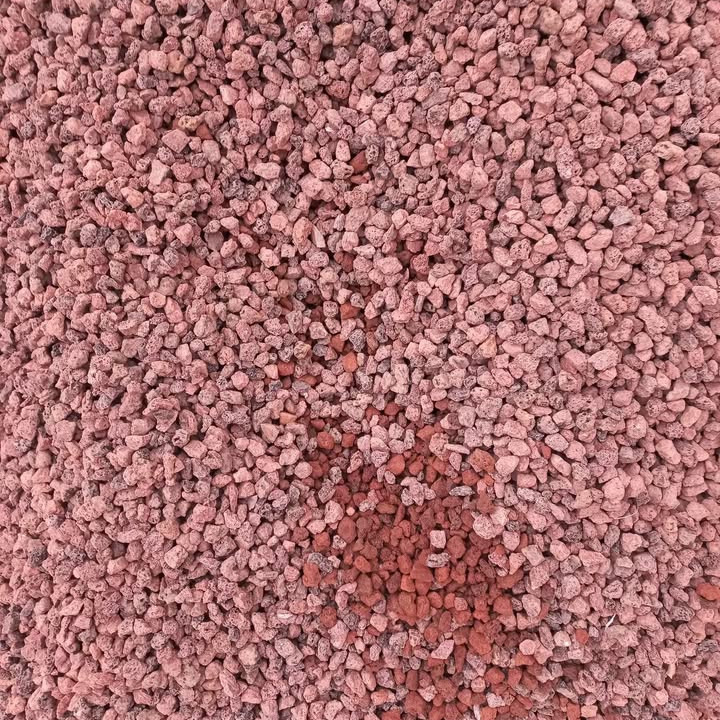
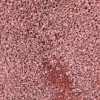
Scoria typically forms from basaltic or andesitic lava and often appears in dark red, brown or black tones. Pumice, usually associated with more silicic magmas, is lighter in color and even more vesicular. Both materials share the same fundamental advantages: extremely low bulk density, high porosity and chemical stability. Because they are formed by natural processes rather than industrial manufacturing, they contain no synthetic binders, dyes or chemical residues.
Turkey’s volcanic regions provide some of the highest-quality deposits of these materials in the Eastern Mediterranean. After extraction, the raw stone is carefully washed, screened and sorted into precise grain-size fractions. This controlled processing ensures consistent performance across landscaping, construction and horticultural applications.
Physical and Chemical Characteristics
The performance of natural scoria and pumice is directly linked to their mineral composition and internal structure. These rocks are primarily silicate-based, containing significant amounts of silica (SiO₂), alumina (Al₂O₃), iron oxides, calcium and magnesium. The abundance of interconnected pores creates a material that is both lightweight and highly functional.
Bulk density typically ranges between 350 and 650 kg per cubic meter, making the material 60–70% lighter than conventional crushed stone or gravel. Porosity often reaches 60–85% by volume. This network of air-filled voids provides excellent thermal insulation, acoustic absorption and water-holding capacity while still allowing excess water to drain freely.
- Ultra-lightweight nature: The low density reduces structural loads on roofs, terraces and elevated planters, which is particularly valuable in seismic zones and multi-story buildings.
- Thermal and acoustic performance: Trapped air cells significantly reduce heat transfer and dampen sound transmission. The thermal conductivity coefficient (λ) usually falls between 0.09 and 0.12 W/mK.
- Fire resistance: As a purely volcanic mineral, the material is classified as A1 non-combustible. It withstands temperatures up to approximately 1100°C without releasing toxic gases.
- Chemical neutrality: With a pH range of 7.0–7.5, natural scoria and pumice do not alter soil chemistry or damage plant roots. They remain stable under long-term exposure to moisture and weather.
- Environmental profile: Completely free of chemical additives, the material is fully recyclable and suitable for green-building certification systems such as LEED and BREEAM.
These intrinsic properties make natural volcanic aggregates superior to many synthetic lightweight fillers and organic mulches that degrade over time or introduce unwanted chemicals into the environment.
Advantages in Professional Landscape Design
In contemporary landscape architecture, surface materials must deliver more than visual appeal. They need to manage water, suppress weeds, protect soil structure and reduce long-term maintenance. Natural scoria and pumice excel in all these areas while providing an attractive, long-lasting surface finish.
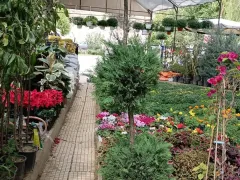
When used as a decorative mulch or ground cover, the material creates a clean, mineral aesthetic that contrasts effectively with green planting. Its rough texture and natural color variations (typically red, brown or anthracite) remain stable under ultraviolet light and weathering. Unlike organic mulches derived from bark or wood chips, volcanic scoria does not decompose, attract insects or require frequent replacement.
- Improved soil aeration and root development: When mixed into planting soil, the angular particles prevent compaction and maintain continuous oxygen supply to the root zone.
- Water retention and drought resistance: The internal pores store moisture and release it gradually during dry periods, reducing irrigation frequency by 30–50% in many climates.
- Superior drainage: Excess rainfall moves rapidly through the porous structure, preventing waterlogging and root rot.
- Weed suppression and temperature regulation: A 4–6 cm surface layer blocks sunlight from reaching weed seeds while moderating soil temperature extremes in both summer and winter.
These functional benefits are especially valuable in arid and semi-arid regions, on sloping sites, and in high-visibility commercial or residential landscapes where low maintenance is a priority.
Technical Specifications and Performance Data
Consistent quality depends on accurate grading and laboratory-verified properties. The following table summarizes typical performance values for high-quality natural scoria and pumice supplied by MT Altaş İnşaat:
| Technical Parameter | Typical Value / Range | Practical Benefit |
|---|---|---|
| Origin and Composition | 100% natural volcanic scoria / pumice | No chemical additives, fully ecological |
| Dry Bulk Density | 350 – 650 kg/m³ | 60–70% lighter than conventional aggregates |
| Porosity | 60 – 85% by volume | Excellent water storage, aeration and insulation |
| Fire Classification | A1 (non-combustible) | Withstands high temperatures without toxic emissions |
| pH Value | 7.0 – 7.5 (neutral to slightly alkaline) | Does not harm plant roots or alter soil chemistry |
| Thermal Conductivity (λ) | 0.09 – 0.12 W/mK | Reduces heat loss and moderates soil temperature |
These figures are indicative and may vary slightly depending on the specific deposit and grain-size fraction. Professional projects should always request current laboratory data for the exact material batch.
Grain-Size Fractions and Recommended Applications
Performance is highly dependent on particle size. Natural scoria and pumice are screened into distinct grading ranges, each suited to specific functions:
- 0–3 mm (fine grade): Ideal for soil amendment, seed-bed preparation, extensive green-roof substrates and horticultural mixes. Improves water-holding capacity and aeration in fine-textured soils.
- 3–8 mm (medium-fine grade): Commonly used in container growing media, shrub planting mixes, lightweight block production and as a base layer beneath coarser drainage materials.
- 8–15 mm (medium grade – most popular for landscaping): Preferred for decorative surface mulching, weed control and general landscape drainage. Offers an attractive finished appearance while delivering strong functional performance.
- 15–30 mm (coarse grade): Used for deep drainage layers, French drains, gabion fill, tree-pit surrounds and large-scale structural drainage where high permeability is required.
Selecting the correct fraction for each layer of a system is essential. Mixing incompatible sizes or using an inappropriate grade can reduce drainage efficiency or compromise surface stability.
Installation Best Practices for Landscape Applications
Long-term performance depends as much on correct installation as on material quality. The following sequence represents current professional practice for surface applications:
- Site preparation: Remove existing vegetation, roots and debris. Establish a slight gradient to direct surface water away from structures. Lightly compact the subgrade.
- Geotextile separation layer: Install a high-quality non-woven geotextile fabric across the entire area. Overlap joints by at least 10–15 cm. This barrier prevents the aggregate from migrating into the soil while blocking upward weed growth.
- Placement of scoria or pumice: Spread the selected grade evenly to the design thickness (typically 4–6 cm for surface mulch). Level the surface carefully with rakes or light mechanical equipment. Avoid over-compaction, which can reduce porosity.
When the material is used as a soil amendment rather than a surface layer, it is thoroughly mixed into the top 20–30 cm of planting soil at rates determined by soil type and plant requirements.
Quantity Calculation for Landscape Projects
Accurate estimation prevents shortages or excess material on site. Using an average bulk density of approximately 550 kg/m³:
- For a 5 cm (0.05 m) depth: 1 m² requires 0.05 m³ ≈ 25–30 kg of material.
- For a 100 m² area at 5 cm depth: approximately 5 m³ or 2.5–3 tonnes.
These figures are averages. Final quantities should account for site irregularities, edge losses and any deeper drainage layers. Professional measurement and calculation services are available for larger projects.
Applications in Building Construction and Insulation
Beyond landscaping, natural volcanic aggregates play an important role in reducing structural loads and improving building performance. Their low density makes them ideal for lightweight concrete, screeds and fill layers, particularly in seismic regions where minimizing mass is a design priority.
- Lightweight concrete and screeds: Replacing conventional aggregates with scoria or pumice can reduce the density of concrete and screed mixes to the range of 600–1200 kg/m³, substantially lowering the dead load on floors and roofs.
- Inter-floor and roof fills: Used as dry fill or in lightweight screeds, the material reduces the load transferred to columns and beams while contributing to thermal and acoustic separation between floors.
- Green-roof and podium drainage: Coarse grades form highly permeable drainage layers that protect waterproofing membranes and prevent water accumulation on roof structures.
The same porous structure that provides drainage also contributes measurable thermal resistance and sound absorption, reducing the need for additional insulation layers in some applications.
Horticultural and Agricultural Uses
In professional horticulture and controlled-environment agriculture, natural scoria and pumice serve as durable, sterile and chemically inert growing media components. They improve the physical structure of both soil-based and soilless systems.
- When blended into heavy clay soils, they increase porosity and prevent compaction after repeated irrigation.
- In sandy soils they enhance water and nutrient retention without creating waterlogged conditions.
- As a pure substrate or major component in hydroponic and container systems, they offer excellent root aeration and can be sterilized and reused for multiple crop cycles.
- In tree and shrub planting pits, a layer of medium or coarse material at the base improves drainage and accelerates root establishment.
Because the material is inorganic and free of organic matter that can host pathogens, it is particularly valued in high-hygiene production environments such as nurseries and commercial greenhouses.
Packaging, Logistics and Project Supply
Efficient logistics are essential for both small residential projects and large commercial contracts. Material is available in several formats to match site access and handling equipment:
- 40-litre bags: Suitable for small gardens, potting work and restricted-access sites where manual handling is required.
- Big-bag (approximately 1 m³) packaging: Ideal for medium-scale projects, terraces and roof applications. Bags can be lifted by crane or telehandler, minimizing dust and waste.
- Bulk delivery by truck or trailer: The most economical option for large landscaping schemes, infrastructure drainage and industrial use. Volume pricing and optimized transport routes reduce cost per tonne.
Because of the material’s low density, a single truck can carry significantly greater volume than when transporting conventional aggregates, improving transport efficiency and lowering the carbon footprint of delivery.
Why Professional Supply and Installation Matter
Material quality alone does not guarantee long-term success. Correct grading, proper sub-base preparation, accurate quantity calculation and careful placement are equally important. Incorrect particle size, missing geotextile layers or inadequate depth can lead to settlement, weed breakthrough or drainage failure within a few seasons.
MT Altaş İnşaat provides a complete service package that includes site assessment, precise material specification, supply of graded volcanic aggregates and, where required, professional installation. Our technical team works with landscape architects, contractors and project managers to match the right product and installation method to each specific application.
Frequently Asked Questions
Does natural volcanic scoria or pumice fade in color over time?
No. The colors are inherent to the mineral composition and remain stable under ultraviolet exposure, rain and freeze–thaw cycles. No artificial pigments are present.
How much material is needed per square meter?
For a typical 5 cm surface layer, expect approximately 25–30 kg per square meter. A 100 m² area therefore requires roughly 2.5–3 tonnes.
Is a geotextile layer necessary?
While not always mandatory, a quality geotextile is strongly recommended. It prevents the aggregate from sinking into the soil and greatly reduces weed growth from below.
Will the material harm plants or soil chemistry?
On the contrary. With a neutral pH and inert mineral composition, it improves soil structure, enhances aeration and supports healthy root development without introducing harmful substances.
Does the material blow away or wash out in heavy weather?
Unlike lightweight organic mulches, properly graded scoria and pumice have sufficient mass and angular texture to remain stable under normal wind and rainfall conditions when installed at the correct depth.
Can the material be used in structural concrete or roof systems?
Yes. Its low density makes it highly suitable for lightweight concrete, screeds and green-roof drainage layers, reducing structural loads while providing functional drainage and insulation benefits.
What packaging options are available for international or large projects?
Material can be supplied in small bags, big-bags or bulk, depending on project scale and logistics requirements. Export-oriented packaging and documentation can be arranged for international shipments.
Request Technical Information or a Project Quotation
Our team is ready to assist with material selection, quantity calculation and supply logistics
| Dimensions & Size | |
| Thickness | 0-3 mm, 3-8 mm, 8-15 mm, 15-30 mm (Sifted) |
| Physical Properties | |
| Material Structure | 100% Natural Magmatic Volcanic Mineral |
| Porosity | 60% – 85% Porosity |
| Texture | Highly Porous, Spongy Texture |
| Stone Type | Volcanic Cinder and Pumice Rock |
| Color | Brick Red, Brown, Anthracite / Black |
| Durability | |
| UV Resistance | Fully Resistant to UV Rays (Does Not Fade in the Sun) |
| Water Absorption Rate | 20% – 35% (High Moisture Retention and Drainage) |
| Applications & Installation | |
| Climate Adaptability | High Frost Resistance (Does Not Crack/Crumble Under Temperature Fluctuations) |
| Area of Use | Garden Landscaping, Walkways, Drainage Beneath Planters, Roof Gardens, Lightweight Screed Fill |
| Installation Method | Laying on the Soil Surface (Over Geotextile Felt) or Mixing into the Soil |
| Logistics Sales & Quantity | |
| Packaging | 40-Liter Sack, 1m³ Big Bag, Bulk (Truck/Semi-trailer) |
| Quality Standard | Compliant with TS EN Standards for Natural Stone & Aggregates |
| Sales Unit | Liters / Cubic Meters (m³) / Tons / Sacks |
| Origin / Production | Türkiye / Ankara Facilities (MT Altaş Construction) |
Customer Experiences, Application Areas and Official Technical Responses
Verified customer feedback is presented professionally with product selection details, application-area labels and official MT Altas technical responses.