


Ask a Question About This Product
Product Summary


Smaragd Thuja 100–125 cm | Emerald Green Arborvitae for Privacy Hedges & Landscaping
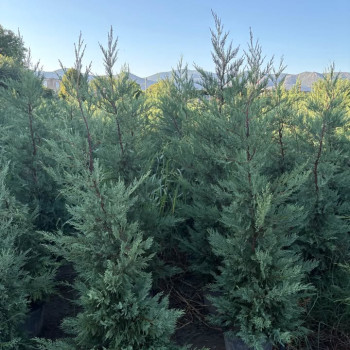
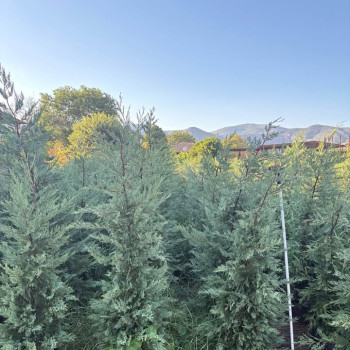
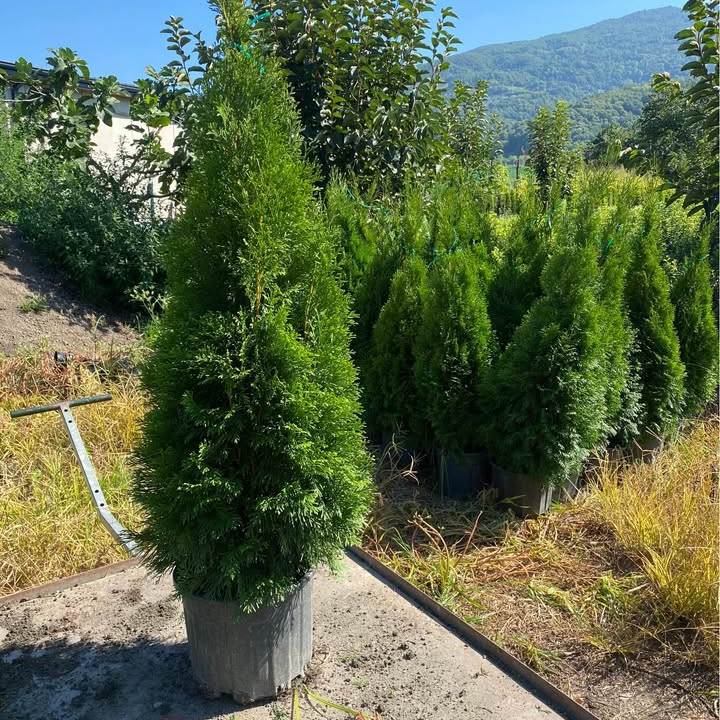
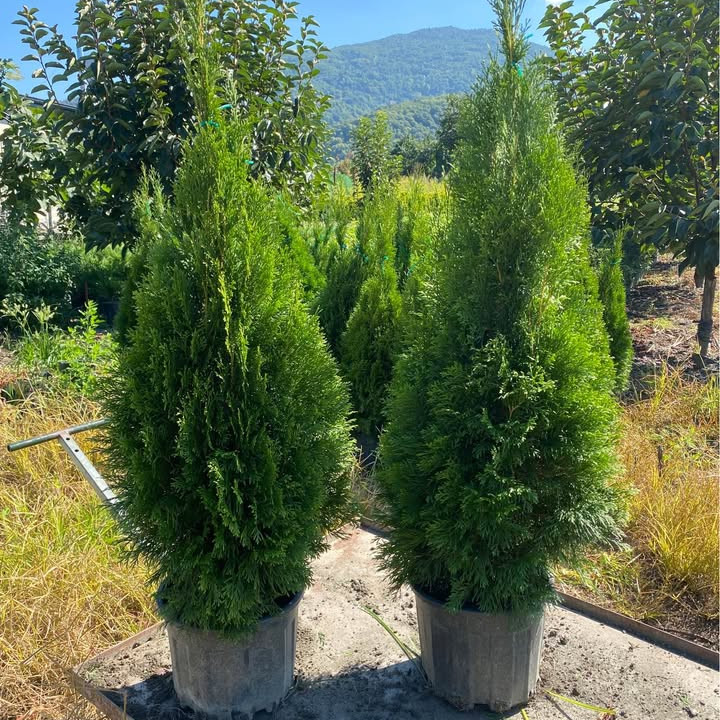
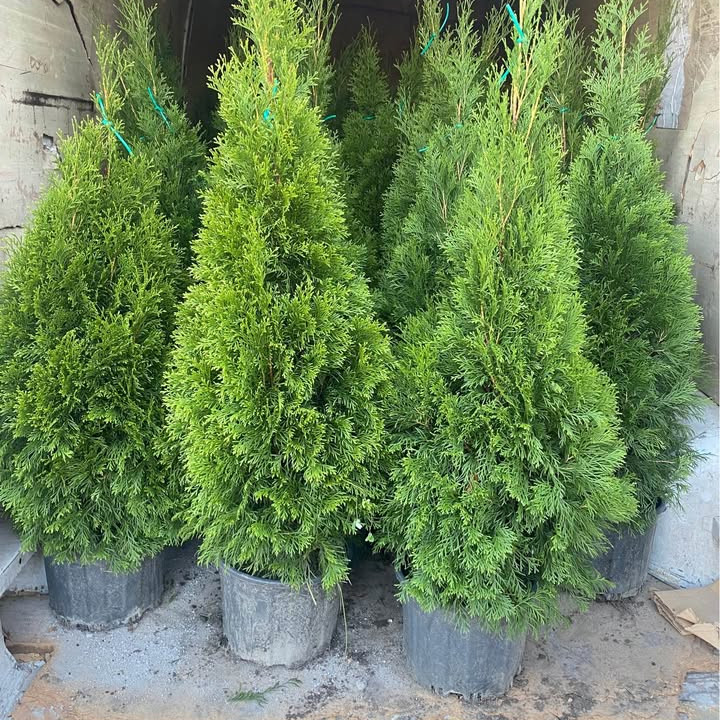
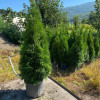
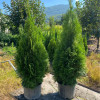
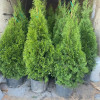
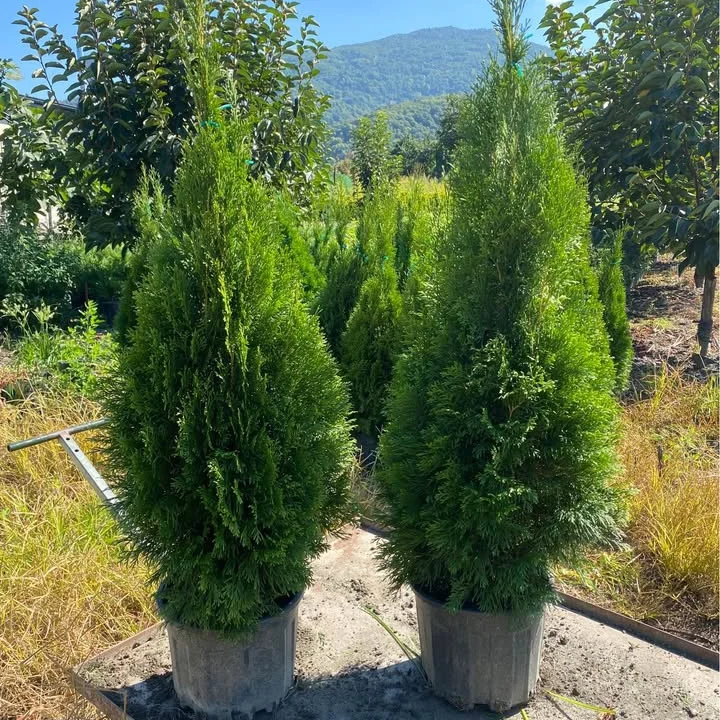
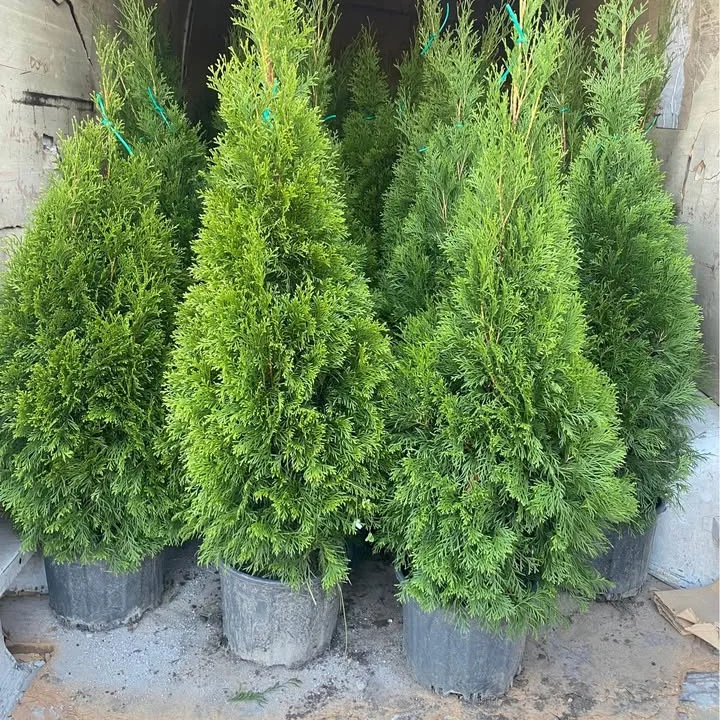
Smaragd Thuja, botanically known as Thuja occidentalis 'Smaragd', is an evergreen conifer valued for its dense green foliage, naturally narrow pyramidal shape and year-round landscape appeal. It is widely known internationally as Emerald Green Arborvitae or Emerald Green Thuja and is commonly used for privacy hedges, living fences, garden borders, screening, villa landscaping, residential gardens and commercial landscape projects.
This page provides practical information about 100–125 cm Smaragd Thuja plants, including hedge spacing, planting, watering, soil requirements, pruning, container growing, landscape applications and hedge quantity calculation.
Smaragd Thuja at a Glance
- Botanical name: Thuja occidentalis 'Smaragd'
- Common names: Emerald Green Arborvitae, Emerald Green Thuja, Smaragd Arborvitae
- Plant type: Evergreen conifer
- Growth habit: Dense, upright and naturally pyramidal
- Typical use: Privacy hedge, living fence, screening and landscape planting
- Available plant size: 100–125 cm
- Preferred position: Full sun to suitable partial shade conditions
- Soil: Moist but well-drained soil
What Is Smaragd Thuja?
Smaragd Thuja is the cultivar Thuja occidentalis 'Smaragd', an evergreen member of the Cupressaceae family. Its dense foliage and naturally symmetrical conical habit make it particularly useful where an attractive vertical green structure is required.
The plant is internationally searched under several related terms, including Emerald Green Arborvitae, Emerald Green Thuja, Smaragd Arborvitae and Thuja Smaragd. These terms can refer to the same popular landscape cultivar, although the botanical name remains Thuja occidentalis 'Smaragd'.
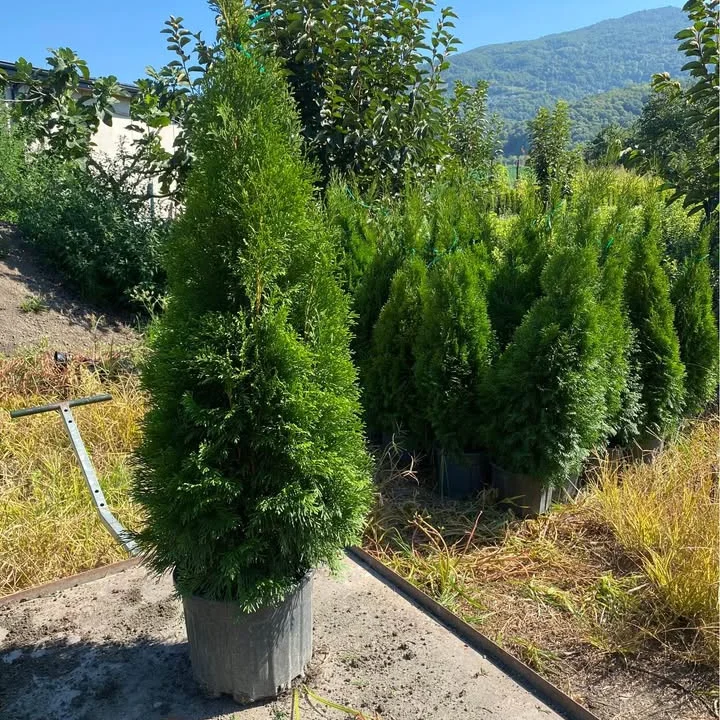
Emerald Green Arborvitae Features
- Evergreen foliage provides year-round green structure.
- Naturally narrow pyramidal growth creates a formal landscape appearance.
- Suitable for privacy screens and living hedge applications.
- Works well in residential gardens, villas, estates and commercial landscapes.
- Can be grown in suitably sized containers with adequate drainage.
- Its upright form makes it useful where horizontal garden space is limited.
Smaragd Thuja for Privacy Hedges
Emerald Green Arborvitae is frequently selected for privacy hedge and screening projects because of its dense evergreen foliage and upright growth habit.
When planted as a hedge, Smaragd Thuja can create a structured green boundary between gardens, properties, terraces, pathways and outdoor living areas. The final hedge density depends on plant size, planting distance, growing conditions and long-term maintenance.
For landscape projects, the planting distance should therefore be determined according to the actual width of the supplied plants and the desired final hedge appearance rather than using one universal spacing for every project.
Smaragd Thuja Hedge Spacing
For 100–125 cm Smaragd Thuja, planting distances around 60–70 cm can be considered when a denser initial hedge effect is desired. A spacing of approximately 75–80 cm provides more room between plants and allows the individual pyramidal form to remain more visible.
These figures are practical planning ranges rather than fixed horticultural rules. The final spacing should consider the actual plant width, root-ball or container size, site conditions and the desired mature hedge appearance.
| Hedge application | Approximate spacing | Purpose |
|---|---|---|
| Dense privacy hedge | 60–70 cm | Closer initial screening effect |
| Standard garden hedge | 75–80 cm | More space for natural plant form |
| Individual or group planting | 100 cm+ | Emphasize individual plant structure |
How Many Emerald Green Arborvitae Plants Do I Need?
The approximate number of Smaragd Thuja plants required for a hedge can be calculated by dividing the total hedge length by the selected planting distance. Corners, gates, entrances and start/end positions may affect the final quantity.
| Hedge length | 60 cm spacing | 75 cm spacing |
|---|---|---|
| 10 m | Approximately 17 plants | Approximately 14 plants |
| 25 m | Approximately 43 plants | Approximately 34 plants |
| 50 m | Approximately 84 plants | Approximately 67 plants |
| 100 m | Approximately 168 plants | Approximately 135 plants |
Emerald Green Arborvitae Hedge Calculator
Calculate the approximate number of Smaragd Thuja plants required for your hedge.
Dense Hedge
60 cm spacingStandard Hedge
75 cm spacingThe final quantity may vary according to corners, gates, starting and ending points, plant width and project layout.
How to Plant Smaragd Thuja
1. Mark the planting line
Use a string line to create a straight planting axis. Maintain sufficient space from walls, paths and other permanent structures for healthy development and maintenance access.
2. Check soil drainage
Smaragd Thuja performs well in moist but well-drained soil. Areas where water remains around the root zone for extended periods should be improved before planting.
3. Position the root ball correctly
Place the plant so that the top of the root ball is level with the surrounding soil. Avoid planting excessively deep because poor planting depth can contribute to root-zone problems.
4. Water thoroughly after planting
Give the newly planted Thuja sufficient water to moisten the root zone. During the establishment period, regularly check soil moisture and adjust watering according to weather and soil conditions.
5. Support newly planted trees when necessary
In exposed or windy locations, newly planted taller specimens may benefit from flexible support until the root system becomes established.
Smaragd Thuja Soil and Sun Requirements
Emerald Green Arborvitae generally performs well in a sunny position with moist but well-drained soil. Good drainage is particularly important because prolonged waterlogging can negatively affect root health.
Soil preparation should focus on good structure, adequate drainage and consistent moisture availability rather than simply adding large amounts of fertilizer.
How Often Should Smaragd Thuja Be Watered?
There is no single watering schedule suitable for every Smaragd Thuja planting. Water requirements depend on temperature, rainfall, soil type, plant age, container size and root development.
- Newly planted Thuja: Monitor soil moisture regularly during establishment.
- Hot weather: Water requirements can increase during prolonged dry periods.
- Rainy periods: Reduce additional irrigation when natural rainfall is sufficient.
- Hedge planting: Drip irrigation can provide controlled and consistent water distribution.
- Container plants: Check moisture more frequently because containers have limited soil volume.
Fertilizing Emerald Green Arborvitae
Fertilizer requirements depend on soil fertility, plant condition and growing conditions. Excessive fertilizer should not be used as a substitute for proper soil preparation and irrigation.
A suitable slow-release fertilizer may be considered during active growth when required. Soil testing can provide more useful information when a detailed fertilization program is needed.
How to Prune Smaragd Thuja
One of the advantages of Thuja occidentalis 'Smaragd' is its naturally organized pyramidal form. As a result, heavy pruning is usually unnecessary when the plant is grown in its natural shape.
- Use light trimming to maintain hedge form when necessary.
- A slightly wider lower section can help maintain better light exposure throughout the hedge.
- Avoid severe cuts into old, bare woody sections where possible.
- Use clean and properly maintained pruning tools.
Why Is My Smaragd Thuja Turning Brown or Yellow?
Brown or yellow foliage does not automatically indicate one specific disease. Several factors may contribute to foliage discoloration, including water stress, poor drainage, environmental stress, pests and fungal problems.
- Check whether the soil remains excessively wet.
- Consider recent drought, heat or transplanting stress.
- Inspect stems and foliage for visible pest symptoms.
- Determine whether discoloration affects one branch, several branches or the entire plant.
- Check whether the plant has adequate light and air circulation.
If the cause cannot be identified from visual symptoms, professional plant-health advice can help determine the appropriate treatment.
Does Emerald Green Arborvitae Turn Brown in Winter?
Smaragd Thuja is an evergreen plant, but evergreen does not mean that foliage color can never change under environmental stress.
Cold exposure, drying winds, insufficient soil moisture and other environmental factors can influence foliage appearance. For this reason, product descriptions should avoid absolute claims such as “the foliage can never change color under any winter conditions.”
Can Smaragd Thuja Be Grown in Containers?
Yes. Emerald Green Thuja can be grown in suitably large containers with adequate drainage. Container-grown plants have a restricted root volume, so watering, drainage and container size require closer attention.
Large pots or planters can make Smaragd Thuja suitable for terraces, entrances, balconies with appropriate structural capacity and commercial outdoor spaces.
Smaragd Thuja Landscaping Uses
- Privacy hedges around residential gardens
- Living fences between properties
- Villa and luxury garden landscaping
- Residential estate and housing projects
- Commercial landscape projects
- Garden borders and property boundaries
- Green screening around outdoor living areas
- Symmetrical planting along paths and entrances
- Large container planting
- Institutional and corporate landscape applications
Smaragd Thuja Price – What Determines the Cost?
The price of Smaragd Thuja 100–125 cm can vary according to plant size, container or root-ball condition, production quality, quantity, availability, transportation distance and delivery requirements.
When comparing Emerald Green Arborvitae prices, it is important to compare plants with similar dimensions, root conditions and quality standards rather than comparing price alone.
- Actual plant height
- Plant width and fullness
- Container or root-ball size
- Root condition
- Foliage density and general plant quality
- Quantity required for the project
- Transportation and delivery requirements
Request Information About Smaragd Thuja
For 100–125 cm Smaragd Thuja, Emerald Green Arborvitae hedge quantities, landscape projects and current product availability, contact MT Altaş İnşaat & Peyzaj.
Smaragd Thuja Frequently Asked Questions
What is Smaragd Thuja?
Smaragd Thuja is the evergreen cultivar Thuja occidentalis 'Smaragd', commonly known internationally as Emerald Green Arborvitae or Emerald Green Thuja.
Is Smaragd Thuja good for privacy hedges?
Yes. Its dense evergreen foliage and upright pyramidal growth habit make it suitable for privacy screens, living fences and garden hedges.
How far apart should 100–125 cm Smaragd Thuja plants be planted?
Approximately 60–70 cm can be considered for a denser initial hedge, while 75–80 cm provides more space for the natural plant form. The final spacing should be based on actual plant width and project requirements.
How many Smaragd Thuja plants do I need for a 10 meter hedge?
At approximately 60 cm spacing, a 10 meter hedge requires around 17 plants. At approximately 75 cm spacing, around 14 plants may be required. The exact quantity depends on the layout, corners and start/end points.
How fast does Emerald Green Arborvitae grow?
Growth rate varies according to climate, soil, water, sunlight, plant age and maintenance. A fixed annual growth figure should therefore not be treated as a guarantee for every site.
Does Smaragd Thuja prefer full sun?
Smaragd Thuja generally performs well in a sunny position. Soil moisture and drainage should also be considered when selecting the planting location.
Can Emerald Green Thuja be grown in pots?
Yes. Smaragd Thuja can be grown in sufficiently large containers with good drainage, provided watering and root space are managed appropriately.
Why is my Smaragd Thuja turning brown?
Possible causes include water stress, poor drainage, environmental stress, pests or fungal problems. Examine the root-zone moisture, recent weather conditions and foliage for additional symptoms.