

Ask a Question About This Product
Product Summary
Professional Kerb & Curb Stone Calculator | Quantity and Cost Estimator Tool
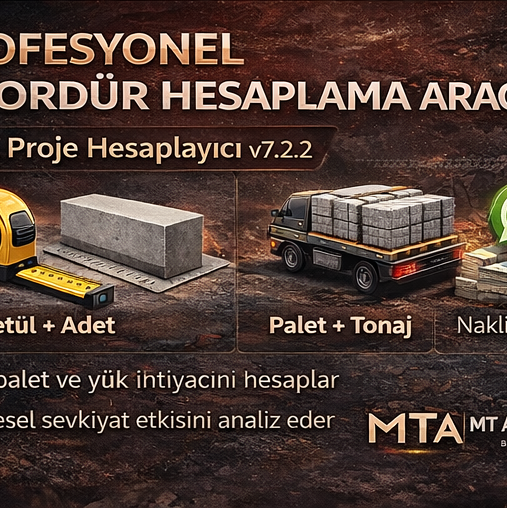
The MTA Project Calculator is a professional kerb and curb stone calculation tool designed for construction professionals, contractors, and property owners who need a fast and reliable way to estimate project requirements.
This tool allows you to calculate total kerb stone quantity, pallet requirements, transportation planning, and approximate cost based on linear meter input. It is suitable for garden landscaping, municipal road projects, parking areas, and large-scale construction applications.
Simply enter your total length, select the curb type, and define the delivery region to get an instant estimate. This system provides a quick pre-project analysis before requesting a detailed on-site quotation.
The MTA Project Calculator is designed to help contractors, developers, landscapers, and property owners estimate kerb and curb stone requirements more efficiently. Instead of relying on rough manual guesses, this tool provides a faster way to review approximate unit quantity, pallet need, transport planning, and overall project scope before requesting a final quotation.
This page is suitable for garden edging works, municipal curb installations, roadside applications, commercial landscaping, and infrastructure projects where kerb stone quantity and approximate cost estimation are important during the planning stage.
Enter your project length, select the curb type, define the region and delivery distance, and review the estimated results instantly. For final pricing, site-specific conditions, loading details, and installation requirements should always be evaluated separately.
Curb Stone Digital Quote System
Linear meter based analysis and delivery estimation.
Current Curb Stone Data and Smart Calculation Area
Select the service type, enter the total linear length, choose the curb type, and get a fast approximate cost analysis.
What Is a Kerb or Curb Stone Calculator?
A kerb or curb stone calculator is a practical estimation tool that helps determine how many curb units may be required for a project, how many pallets may be needed for shipment, and what the approximate logistics and cost structure could look like before the work begins. This type of tool is especially useful in projects where planning speed matters and material underestimation can create delays.
For contractors and project planners, a digital calculator reduces calculation time and helps organize decisions related to material purchasing, transport, and preliminary budgeting. For property owners, it provides a clear first overview before requesting detailed site-based support.
How to Calculate Kerb and Curb Stone Quantity
Calculation by Linear Meter
Kerb stones are generally estimated by linear meter rather than square meter. The total project length forms the basis of the calculation, and the selected curb dimensions determine how many units are required within that total length.
Different Curb Types Change the Result
Smaller garden kerbs and larger municipal kerbs do not consume material at the same rate. Because each type has different dimensions and weight, the total quantity, pallet loading, and transport requirements also change accordingly.
Allowance for Corners, Cuts, and Site Conditions
In real projects, straight length alone is not always enough. Corners, level differences, cutting requirements, and installation tolerances may influence the final quantity. For this reason, practical planning should always consider site-specific factors before final purchasing.
Common Types of Kerb and Curb Stones
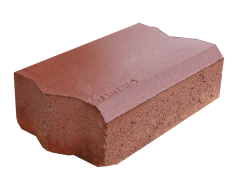
Garden Kerb Stones
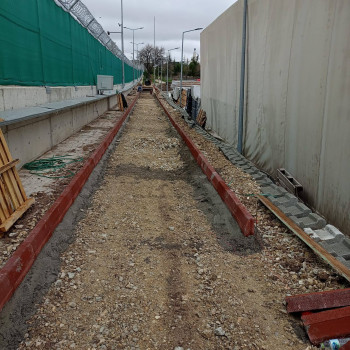
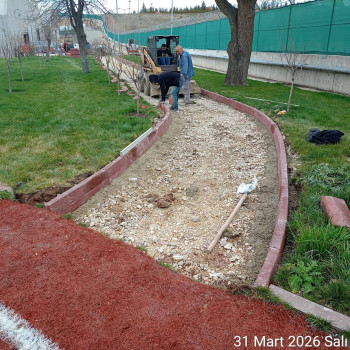
Garden kerbs are often preferred in residential landscaping projects, villa gardens, site borders, decorative pathways, and light-duty edge separation areas. They help define clean visual boundaries while keeping the installation practical and organized.
Municipal and Road Kerbs
Municipal curb stones are typically used in sidewalks, roads, parking zones, public infrastructure, and heavy-duty urban applications. These products are larger, heavier, and better suited for projects where durability and structural edge definition are critical.
Project-Specific Kerb Solutions
Some projects require different dimensions, alternative production types, or application-specific solutions depending on engineering drawings, traffic conditions, slope design, or the surrounding paving system.
What Affects Kerb Stone Cost?
Product Type and Dimensions
The most direct cost factor is the curb type itself. Dimensions, production method, and intended use affect both material cost and handling requirements.
Labor and Installation Scope
Installation cost depends on more than simply placing the curb units. Ground preparation, alignment, bedding, fixing method, and finishing details all influence labor time and project complexity.
Transport Distance and Delivery Planning
Kerb stones are heavy construction products, so delivery planning can significantly affect the final quotation. Region, loading conditions, vehicle capacity, and trip distance all contribute to transport cost.
Project Size
Larger projects may offer stronger logistics efficiency and more stable planning, while smaller projects sometimes carry proportionally higher delivery and setup costs.
Where Are Kerb and Curb Stones Used?
Gardens and Landscape Borders
Kerb stones are widely used to separate lawn areas, planting beds, footpaths, and decorative outdoor spaces. They improve visual order and support long-term edge stability.
Road and Pavement Edges
In infrastructure and public works, curb stones define the edge between roadways, pedestrian areas, and drainage lines. This makes them a fundamental part of many municipal projects.
Parking Areas and Commercial Spaces
Parking facilities, retail surroundings, commercial landscaping, and large outdoor circulation areas frequently use curb systems to create safer and better-organized boundaries.
Industrial and Public Projects
Industrial sites, schools, hospitals, housing developments, and public open areas often rely on curb systems for both structural and visual planning.
How to Choose the Right Kerb Stone
For Residential Landscaping
Projects focused on gardens, villa surroundings, decorative borders, and pedestrian-friendly outdoor spaces often benefit from lighter and more compact curb types.
For Municipal and Urban Works
Roadside and public infrastructure projects usually require larger and stronger curb units that are better suited for demanding service conditions.
For High-Traffic Areas
Where mechanical impact, vehicle movement, or long-term edge resistance matters, the correct curb type should be selected according to durability, stability, and engineering suitability.
Basic Kerb Stone Installation Overview
Ground Preparation
The base area should be prepared properly before installation. Surface stability, excavation depth, and foundation quality influence the long-term result.
Alignment and Level Control
Correct line control is essential for both appearance and function. Poor alignment can create visible irregularities and affect edge performance.
Fixing and Bedding
Depending on the project, kerb stones may be installed with mortar, concrete support, or other fixing methods suitable for the intended load and layout.
Finishing and Stability Check
After installation, final checks should confirm line continuity, height consistency, and edge integrity across the entire project length.
Frequently Asked Questions About Kerb and Curb Stone Calculation
Is this calculator suitable for both kerb and curb searches?
Yes. The page is structured to serve both “kerb” and “curb” terminology, helping users from different English-language markets understand the same project need.
Does the result show an exact final quotation?
No. The calculator is intended for approximate planning. Final pricing should always be confirmed based on site conditions, product preference, logistics, and installation scope.
Why does transport matter so much in curb stone projects?
Because kerb stones are heavy construction materials, delivery planning has a direct effect on cost, timing, and project organization.
Can this tool be used before contacting your team?
Yes. It is designed as a practical first-step estimator so users can understand approximate project scale before requesting a detailed professional quote.
Why Use the MTA Project Calculator?
The MTA Project Calculator brings together quantity review, transport planning, pallet logic, and approximate budget evaluation in a single interface. Instead of separating these stages manually, users can review a fast preliminary analysis in one place.
This makes the page useful not only as a product page, but also as a practical decision-making tool for real project planning.
Get a Fast Quote for Your Kerb or Curb Stone Project
Use the calculator above to review your approximate project data, then contact us for a more detailed evaluation based on delivery region, curb type, project scope, and installation needs. For final confirmation, on-site conditions and project-specific details should always be reviewed separately.